
Gut Health Foods: The Fibre Choices That Matter Most
Gut health foods do more than add fibre to your plate: different plant foods bring different fibre structures, which can support digestion and feed your gut microbiome in distinct ways.
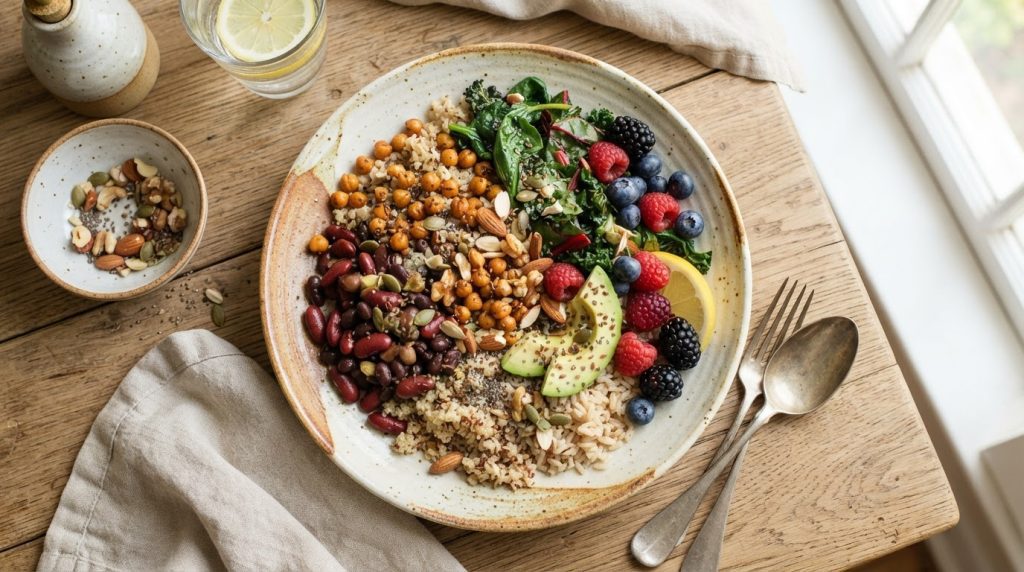
Key Takeaways
- Aim for variety. A mix of fruit, vegetables, whole grains, legumes, nuts and seeds gives you different types of fibre.
- Soluble, insoluble and fermentable fibres have different roles. They can overlap, so no single type or food is the one perfect choice for everyone.
- Choose whole fruit and varied vegetables. Edible skins and fruit pulp contribute fibre, while beans and lentils are easy to add to familiar meals.
- Prebiotic fibres are part of dietary fibre. Foods such as onions, garlic, oats and legumes offer fibres gut microbes can use.
- Build up gradually. A sudden increase can bring bloating or gas, so make changes in portions that feel comfortable and keep fluids regular.
- Use food labels thoughtfully. Fibre grams are useful, but they do not tell you whether a food contains whole plant ingredients or which type of fibre has been added.
How fibre supports digestion and why variety matters
Dietary fibre is the part of plant foods that is not fully digested in the small intestine. Depending on its structure, fibre can add bulk to stool, hold water or be used by gut microbes, supporting bowel regularity in different ways.
Spread fibre across meals and snacks rather than trying to get it all from one superfood or an oversized bowl of bran.
Variety matters because fibre is not one single substance. A high fibre total does not mean every food will affect digestion in the same way, and relying on one favourite source leaves out the different structures found in other plants.
We believe in a steady, nourishing approach: oats at breakfast, beans in lunch or dinner, fruit as a snack and vegetables alongside your main meal. For more ideas to bring different plant foods into your week, explore 50 Foods for a Healthy Gut.
We’ve been fascinated to the point of obsession with how everyday food choices can support the gut microbiome. Start with familiar foods, then build variety in a way that suits your meals and your digestion.
Soluble, insoluble and fermentable fibre are not interchangeable
Soluble fibre dissolves or disperses in water and can form a gel. Oats contain beta-glucan, a type of soluble fibre, while fruit and legumes are other familiar sources.
Insoluble fibre, found in whole grains and vegetable matter, helps add bulk to stool. It is not simply another name for fermentable fibre, and foods can contain more than one kind of fibre.
Fermentable fibre is used by gut microbes, which can produce short-chain fatty acids as they break it down. Some soluble fibres ferment, but these categories overlap rather than sorting foods into separate, non-overlapping groups.
So, what is the best fibre for your gut? A varied mix is more useful than searching for one winner: try oats and beans alongside wholegrain foods and vegetables, so your meals include different fibre structures.
That variety is one reason gut health foods can be personal as well as practical. A food that feels comfortable for one person may cause gas or bloating for another, so pay attention to your own response without assuming you need to avoid fibre altogether.
Did You Know?
The diet of U.S. consumers averaged 8.1 grams of fiber for each 1,000 calories in 2017–18, or 58 percent of the recommended 14 grams per 1,000 calories.
Source: USDA Economic Research Service
Choose fibre across fruit, vegetables, grains, pulses, nuts and seeds
Whole fruit brings fibre along with its natural structure, especially when you eat edible skins such as those on apples and pears. Juice usually loses fibre when the pulp is removed, so choose whole fruit often when fibre is the goal.
Rotate vegetables such as broccoli, leafy greens, sweet potato and asparagus with beans, lentils and chickpeas. Pulses are especially practical: they contribute fibre and fit easily into soups, salads and stews.
Choose oats and wholegrain foods regularly. Oats provide beta-glucan, while wholegrain wheat and other grains bring different fibre structures; nuts and seeds can add variety to meals, too, but work best as part of a broader mix rather than as your only fibre source.
For a practical set of options, browse high-fibre food ideas and fibre-rich meal suggestions. The food ideas include oats, beans, lentils, chickpeas, chia and flax seeds, berries, leafy greens, broccoli, avocado, sweet potatoes and asparagus, giving you plenty of familiar ingredients to mix and match.
Try adding berries and seeds to oats, putting chickpeas into a salad, or serving roasted vegetables alongside a meal. Small additions across the day help make high-fibre foods for gut health feel like part of ordinary eating, not a separate project.
Look for prebiotic fibres among ordinary foods
Prebiotic fibres are selectively used by gut microorganisms and can support beneficial microbial activity. They are a subset of dietary fibres, not a separate replacement for the fibre you get from a varied diet.
Onions, garlic, leeks, asparagus and chicory root contain inulin-type fibres. Oats and legumes provide other fibres that gut microbes can use, so prebiotic foods are not limited to one special ingredient.
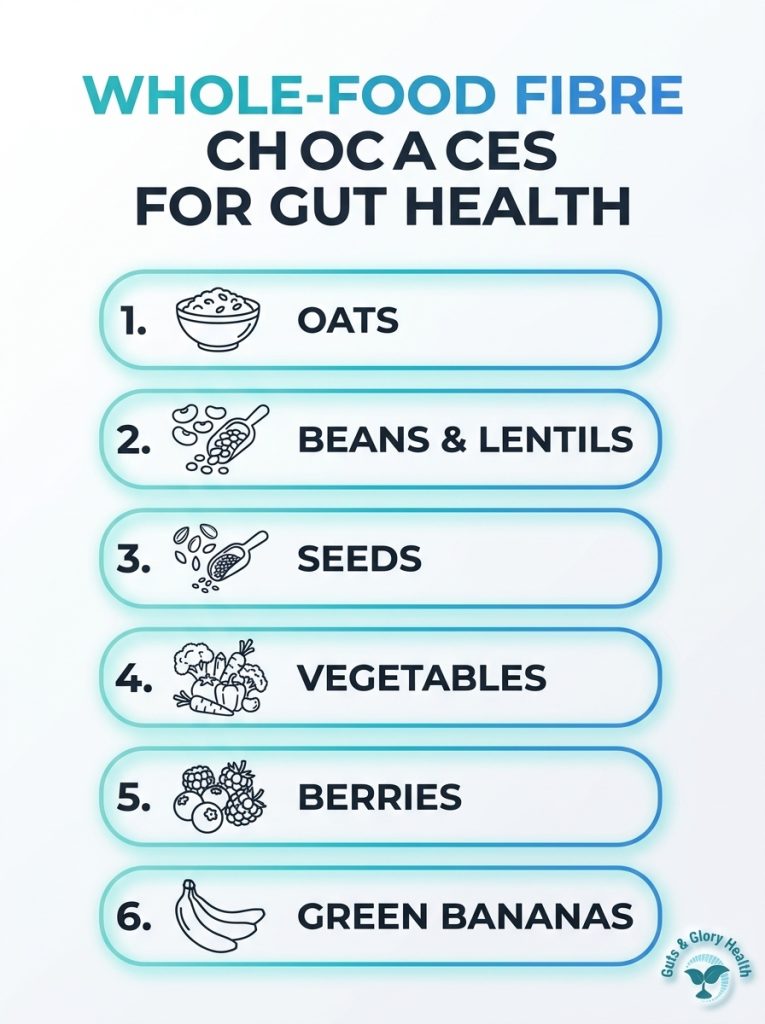
The prebiotic food list includes garlic, leeks, onions, slightly green bananas, asparagus, oats and chicory root. These are ordinary ingredients you can fold into familiar meals, from adding garlic and leeks to soup to choosing oats at breakfast.
Resistant starch is another type of fibre that gut microbes can use. Beans contain it, and it can also increase when cooked starchy foods such as potatoes or rice are cooled, making leftovers one more way to bring different fibres into your meals.
Some fermentable foods increase gas for some people. Introduce them in portions that feel comfortable rather than treating every prebiotic food as essential; the best prebiotic foods are the ones that fit your routine and tolerance.
Build fibre into meals and compare packaged choices thoughtfully
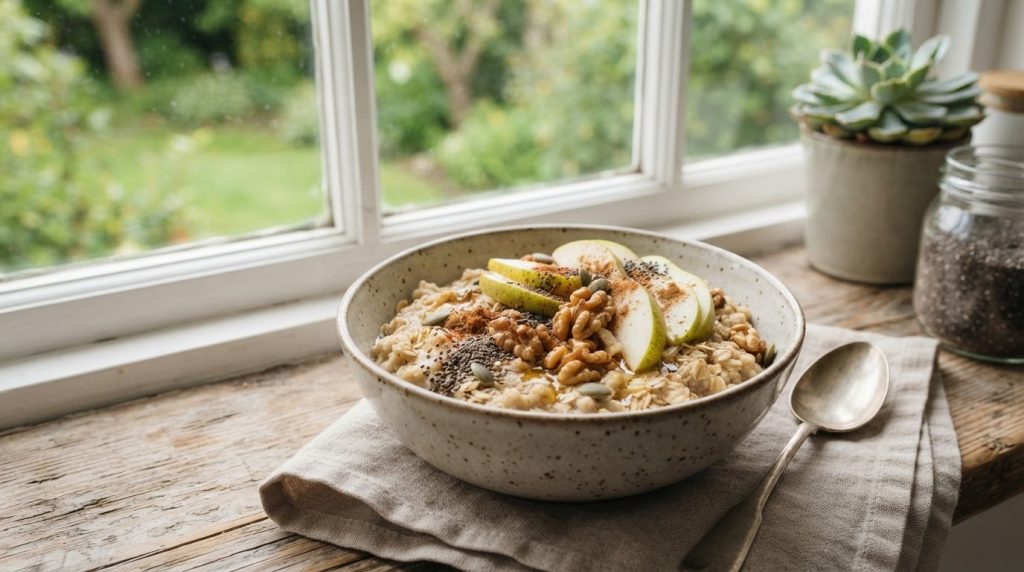
Build a meal from a few sources so fibre is spread across the day: oats with berries and seeds make a simple breakfast, while lentil soup with vegetables and wholegrain bread combines pulses, vegetables and grains.
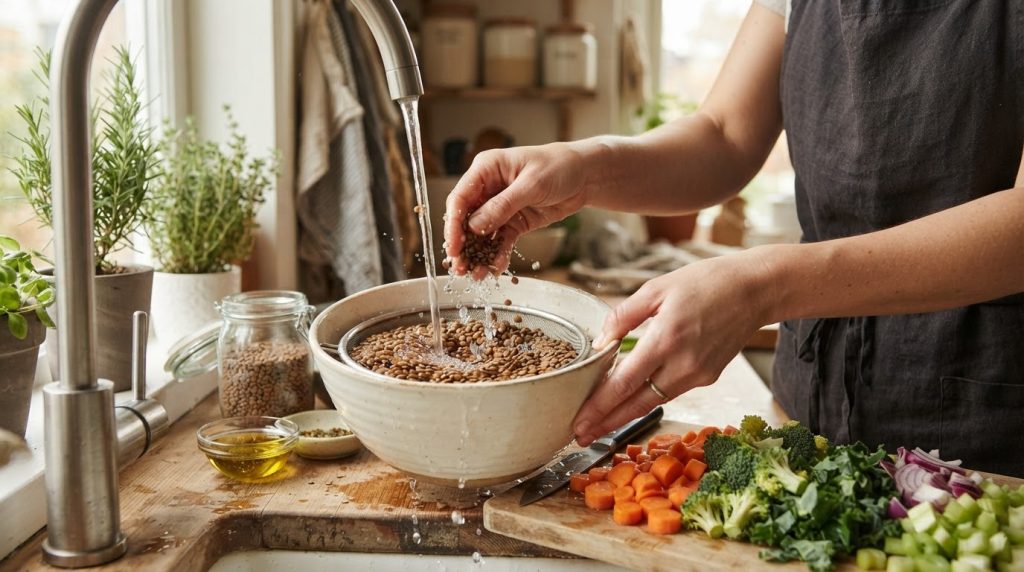
Add beans or lentils to familiar soups, stews and salads. If you use canned legumes, rinsing them under water removes some of the salty packing liquid and makes them ready to add to the dish.
Whole fruit keeps its fibre-rich structure, whereas juice generally provides less fibre. Smoothies made with the whole fruit retain more fibre than strained juice, which loses pulp during preparation.
Packaged foods can contain added fibres such as inulin or chicory-root fibre. Compare the fibre amount per serving on the nutrition label and read the ingredient list, too: the number alone does not show whether the fibre is fermentable or make a packaged food equivalent to whole plant foods.
For straightforward meal inspiration, easy high-fibre meals include ideas such as chia pudding, lentil or chickpea stews, roasted vegetables with hummus, and vegetable or lentil soups. They show how to combine fibre sources in familiar, satisfying dishes.
For another dinner idea, gut-healthy dinners include options such as tomato lentil soup and minestrone. A few dependable meals make it easier to include different plants regularly without planning every plate from scratch.
Did You Know?
Children and adults need at least 25 to 35 grams of fiber per day for good health, but most Americans get only about 15 grams a day.
Source: The Nutrition Source, Harvard T.H. Chan School of Public Health
Increase fibre gradually and adapt to digestive comfort
Increase portions over days or weeks rather than making a sudden, large change. A quick jump in fibre can trigger gas, bloating or cramping while your gut adapts.
Drink fluids regularly as you increase fibre. Fibre absorbs water, and too little fluid can make stools harder to pass.
If a particular food causes discomfort, try a smaller portion or a different fibre source instead of removing all fibre. Tolerance varies, and changing the type or amount can help you find options that feel more comfortable.
Mild, temporary gas can happen as you increase fibre. Severe, persistent or worsening digestive symptoms warrant advice from a health professional.
Frequently Asked Questions
What drink is naturally high in fibre?
A smoothie blended with whole berries, pear and oats can provide fibre from the fruit and grain. Plain water and unsweetened tea are useful drinks, but they do not supply dietary fibre.
Does eating two Weetabix provide enough fibre for a day?
No single breakfast food is a substitute for a varied day’s intake; consider how the rest of your meals contribute.
Do smoothies keep the fibre from whole fruit?
Yes, blending whole fruit keeps much of its fibre in the drink, including the edible parts you put into the blender. If the smoothie settles, give it a stir rather than pouring away the thicker portion.
When might a fibre supplement be useful?
A supplement may be useful when it is difficult to get enough fibre from food or when a health professional recommends a particular approach. Psyllium is a soluble, gel-forming fibre used in some supplements, and a pharmacist can advise on timing if you take medicines.
Is psyllium the same as prebiotic fibre?
No, psyllium is a specific soluble fibre that absorbs water and forms a gel, while prebiotic describes fibres selectively used by gut microorganisms. A fibre can have more than one useful property, but the terms do not mean the same thing.
Can I add fibre to breakfast without changing my whole routine?
Yes. A topping of berries, ground flaxseed or chia can add a plant source to a breakfast you already enjoy, and a spoonful of oats can also be stirred into yoghurt or a smoothie.
Familiar
Gut Health Foods: The Fibre Choices That Matter Most are the familiar, varied plant foods you can enjoy regularly: fruit, vegetables, whole grains, pulses, nuts and seeds. Each brings different fibre structures, from beta-glucan in oats to fermentable fibres that gut microbes can use.
Build fibre into meals and snacks, increase portions gradually and pay attention to what feels comfortable. We believe in making room for cake while keeping a nourishing mix of plants at the heart of everyday meals.