
The real difference behind goat milk and cow milk kefir: what changes in the glass?
The real difference behind goat milk and cow milk kefir starts with the milk, but the culture and fermentation conditions shape the final drink too. We’re fascinated by how small changes in protein, fat and fermentation can shift kefir’s texture, tang and aroma, so let’s make the comparison useful for your fridge.

Key Takeaways
- The milk matters, but it is not the whole story. Breed, feed, fat level and heat treatment can all affect how a batch ferments and feels.
- Culture and fermentation time matter too. Kefir grains and starter cultures can contain different microbes, while a longer ferment usually brings more acidity.
- Texture and flavour can vary. Cow milk kefir may form a firmer set, while goat milk kefir may be softer or more distinctive in aroma, but the process can change either result.
- Neither type is reliably lactose-free. Fermentation reduces some lactose, but the amount left varies.
- Individual tolerance varies: goat milk kefir does not guarantee relief from digestive symptoms. Goat milk is not a safe substitute for cow milk for someone with a milk allergy.
- For a related introduction to the drink and its types, read our milk kefir and goat’s-milk kefir guide.
What each milk brings to fermentation
Before microbes get to work, both goat and cow milk contain lactose, casein and whey proteins. Their amounts vary with breed, feed and fat level, so the animal species alone cannot tell you the finished kefir’s nutritional profile.
Casein is the main protein involved in milk’s curd structure. Goat milk often has a lower proportion of αs1-casein than many cow milks, but that difference varies, and both the type and amount of casein can affect how firmly the proteins set as acidity rises.
Milk fat also shapes richness and mouthfeel. A higher fat level can make kefir feel creamier, while heat treatment changes how milk proteins behave during acidification; compare milks with similar fat levels and processing before crediting a texture difference to the animal.
This is why a simple goat-versus-cow nutrition comparison can mislead. A particular pair of milks may differ in protein or fat, but those values reflect the specific milks as well as their species.
How the culture changes both milks
Kefir is fermented milk made with bacteria and yeast. Traditional kefir grains are a community of lactic acid bacteria and yeasts held in a kefiran-rich matrix, while a commercial starter culture may contain a different combination of microbes.
That mix influences the fermentation. As microbes use lactose, they produce lactic acid and other compounds, reduce some of the milk’s lactose and alter proteins through processes including proteolysis, which can release smaller peptides and free amino acids.
Microbes can also produce exopolysaccharides, including kefiran, which contribute to the drink’s body and viscosity. The amount and balance of these changes depend on the culture, temperature and time, so a different result does not automatically point to the milk species.
A longer ferment usually makes kefir more acidic and can shift its aroma and thickness. To compare goat milk kefir with cow milk kefir fairly, taste batches at a similar fermentation endpoint.
Kefir grains can ferment different milk types, but switching milks may change their activity while they adjust. Watch the fermentation and the finished texture, and give the culture time to settle into its new routine rather than expecting every grain or starter to behave identically.
Milk kefir is a useful starting point if you want to understand the basics of fermented milk and how bacteria and yeast work together. The guide linked above also discusses possible digestive and general wellbeing benefits, while the details of any particular batch still depend on its milk and fermentation.
Did You Know?
The glucose–galactose ratio in kefiran has been reported to range from 1:0.4 to 1:1.88.
Source: Antioxidants
Why texture and flavour can differ
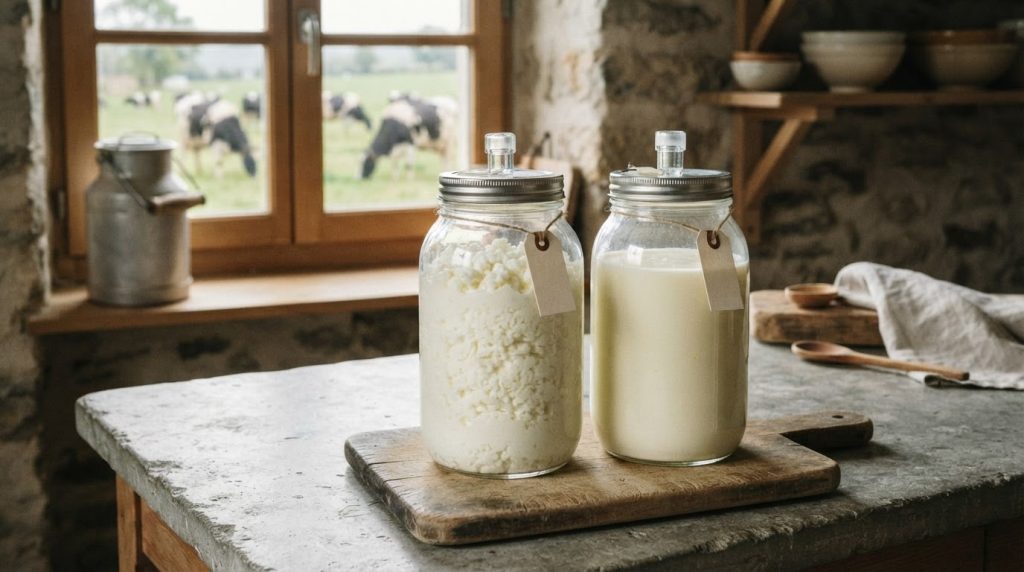
Cow milk kefir may form a thicker or firmer curd, while goat milk kefir can have a softer, less firm structure. Protein levels, heat treatment, fat content and fermentation endpoint all influence the set, so the milk’s species is only one part of the picture.
Goat milk may give kefir a tangier or more distinctive aroma, partly because its fat contains a different balance of fatty acids. The strength of that character varies between milks and batches, and fermentation can bring it forward or soften it.
For a fair taste test, choose plain, unstrained kefirs fermented to a similar acidity. Added flavourings can cover differences in aroma, while straining changes thickness and concentration, making it harder to tell what came from the milk itself.
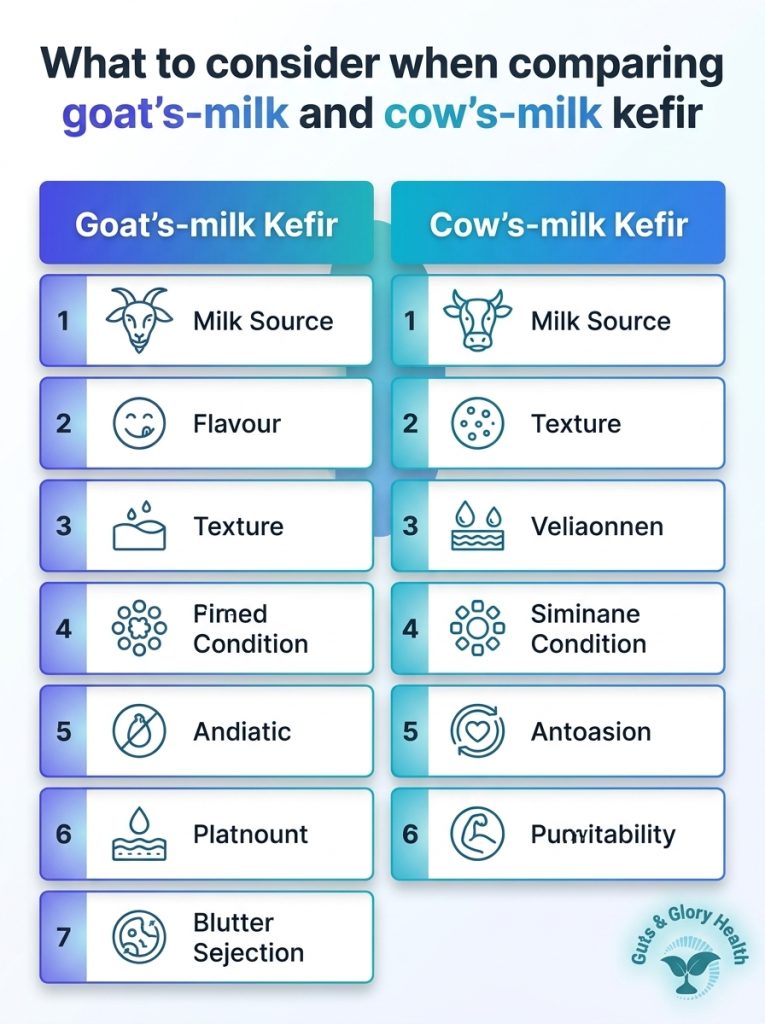
A visual guide to comparing goat’s-milk and cow’s-milk kefir. It highlights factors to consider when choosing between the two.
How does goat milk kefir taste? It can be tangy, with a more distinctive aroma than some cow milk kefirs, but the milk, culture and endpoint all affect the flavour you get.
What the differences mean for nutrition and digestion
Fermentation reduces some of the lactose in milk, but it does not make either goat milk kefir or cow milk kefir reliably lactose-free. The amount remaining depends on the starting milk, culture and fermentation conditions, so the type of milk alone cannot promise a particular level.
Individual responses to goat milk kefir vary; it may not be easier to digest or healthier for everyone. People respond differently, and anyone with a milk allergy should not treat goat milk as a safe substitute for cow milk because both contain milk proteins that can trigger an allergic reaction.
Some comparisons focus on laboratory measures such as antioxidant activity. Those tests describe what happens under the conditions used in the laboratory; demonstrating a health benefit in people requires suitable human studies that measure meaningful health outcomes.
Kefir can be one part of a varied way of eating, but the word fermented does not guarantee a specific effect on digestion, skin or wellbeing. We believe in nourishing choices that fit real life, not promising that one glass will solve every stubborn symptom.
How to make a fair comparison at home
For a useful home test, keep the culture, milk fat level, heat treatment, temperature, vessel and fermentation time as consistent as you can. Change one factor at a time so you can see what is driving a difference instead of changing the milk and the method together.
Use the same fermentation endpoint for both batches, judging acidity and texture rather than relying on the clock alone. Goat and cow milk batches can ferment at different rates, even when you use the same culture and setup.
- Prepare like-for-like milk. Choose plain milks with similar fat levels and comparable heat treatment.
- Use the same culture and setup. Keep the vessel, temperature and other conditions consistent.
- Watch for the endpoint. Compare acidity and texture, not only elapsed time.
- Taste before adding anything. Compare plain batches before adding fruit or straining them.
- Write down what you did. Record the milk type, culture and endpoint so the next batch gives you a meaningful comparison.
If you switch kefir grains from cow milk to goat milk, or the other way round, watch for changes in fermentation speed and texture. Give the culture time to adjust, and use the results of each batch to guide your next comparison.
This simple method also helps when you are deciding what to buy: compare the milk type and ingredients, then consider whether the kefir is plain, flavoured or strained. Those details can explain sensory differences that the words goat or cow alone cannot.
Did You Know?
The protein content of cow, buffalo, donkey, and sheep milks increased after 24 h of fermentation.
Source: Molecules
Which type should you choose?
Choose by the finished kefir’s flavour and consistency. A milder taste or firmer set may suit you, while a more distinctive aroma or softer texture may be exactly what you enjoy.
Goat’s-milk kefir is one option to compare on its own characteristics. It is mentioned among kefir types in our kefir guide, which offers related background on the drink and its possible wellbeing benefits.
For lactose sensitivity, notice your own response. Notice your own response, and seek qualified medical advice for persistent symptoms or a suspected allergy.
And what does this mean? Look to your fridge. Taste, texture and tolerance are more useful guides to your preference than a universal ranking of goat milk against cow milk.
More than the animal
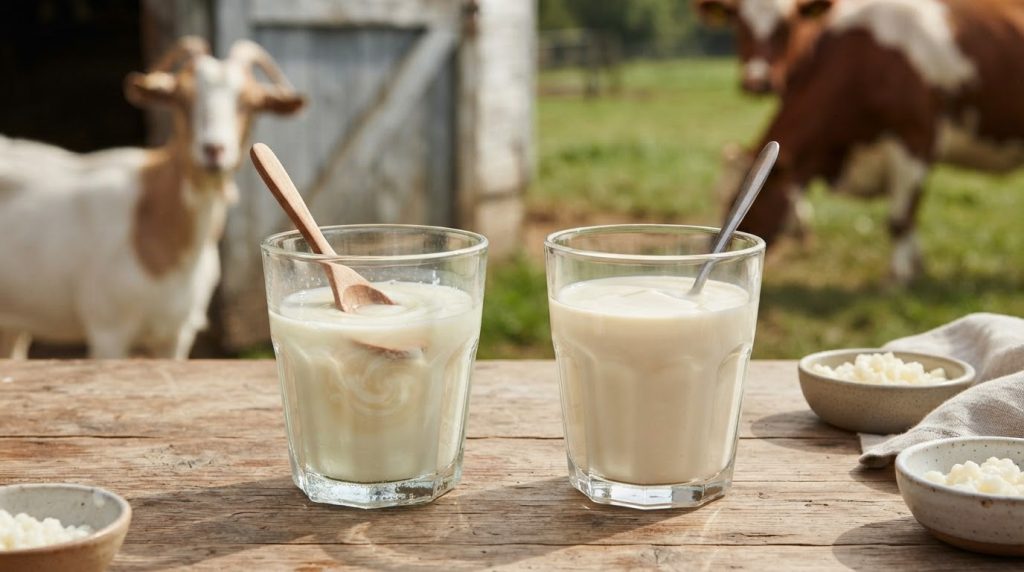
The real difference behind goat milk and cow milk kefir is shaped by more than the animal that produced the milk. Milk composition lays the groundwork, while the culture, processing and fermentation endpoint help determine the aroma, acidity and viscosity in your glass.
Compare plain batches made in similar conditions, then choose the flavour and texture you enjoy and tolerate. A thoughtful taste test can help you find your own favourite; easier digestion or better overall suitability is not guaranteed with goat milk kefir.
Frequently Asked Questions
Can you drink goat milk kefir every day?
Many people can include goat milk kefir regularly if it suits them, but there is no single daily amount that works for everyone. If it is new to you, start with a small serving and notice how you feel before making it a routine.
Does straining change how goat and cow milk kefir compare?
Yes. Straining removes some liquid whey and leaves a thicker, more concentrated kefir, so the result can taste and feel different from an unstrained batch of the same milk.
Can goat milk kefir be used in cooking without losing its live cultures?
Heating kefir during cooking reduces or destroys its live cultures. If you want to retain more of them, stir the kefir into a cooled dish after cooking rather than simmering or baking it.
How long can homemade goat milk kefir be kept in the fridge?
As a cautious household guide, use homemade goat milk kefir within about a week when it has been stored promptly in a clean, sealed container in the fridge. Discard it if you see mould or an unusual colour, or notice a putrid smell.
Can I reuse kefir grains after making a batch?
Yes, kefir grains can be used for another batch after you strain them from the finished drink. Handle them with clean utensils and transfer them into fresh milk so fermentation can continue.