
Probiotic strains for IBS: what the clinical evidence actually shows
Probiotic strains for IBS: what the clinical evidence actually shows is important because one big meta-analysis pooled 20 studies and found probiotics outperform placebo for global IBS symptoms. That means we can talk about “works for IBS” in a way that is not based on vibes, random anecdotes, or hope.
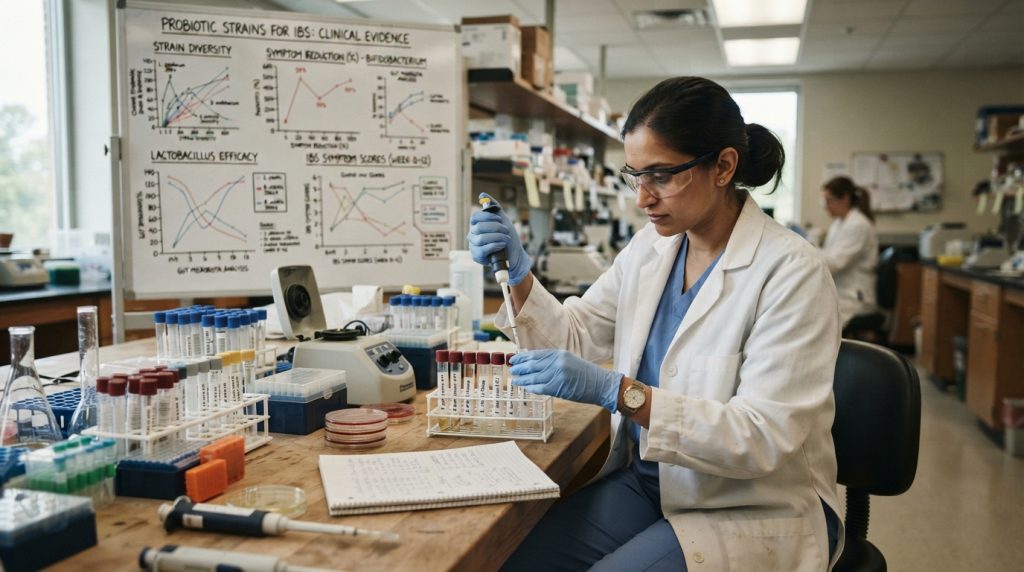
Key Takeaways
| What the evidence says | Across trials, certain probiotic approaches improve IBS symptoms versus placebo, with effects varying by strain, dose, and trial design. |
| Symptom-specific reality | Benefits show up for global symptoms, and commonly for domains like bloating, flatulence, and abdominal pain. |
| Why strain matters | IBS outcomes are not “one probiotic fits all”. Strain and formulation are the difference between signal and noise. |
| Time and dose can change results | Some subgroup analyses suggest shorter courses can help certain symptoms, and higher doses or multiple strains may do better for abdominal pain. |
| Safety looks reassuring | Adverse event frequency is not significantly different vs placebo in pooled analyses. |
| Gut support still matters | Probiotics are only part of the picture. You also need fibre-rich, varied eating to support microbiome diversity. Start with our free microbiome food guide. |
| Curious about the “why”? | If your symptoms and skin ever feel linked, you may like our microbiome care for calm, glowing skin perspective. |
What clinicians mean by “clinical evidence” for IBS probiotics
When we say “what the clinical evidence actually shows”, we are talking about pooled results from controlled trials, not just one promising study. And crucially, we look at probiotic strains, doses, durations, and which IBS outcomes improved.
IBS is messy. Symptoms change across time, diets vary, stress shifts gut motility, and the microbiome itself is influenced by everything from sleep to what ends up in your fridge. That is why the evidence needs to be interpreted like a pattern, not a single win.
The biggest shift we see is that researchers and clinicians are far more honest about variability. They do not say “probiotics work for everyone”. They say “some strains, at some doses, for some outcomes, in controlled settings, beat placebo”. That framing is not only more accurate, it is also more useful when you are trying to choose what to try next.
Quick reality check: even the strongest meta-analysis can show high heterogeneity, meaning the effect differs between trials. That is not a failure, it is the dataset telling you that strain and protocol choices matter.
Probiotic strains for IBS: what the clinical evidence actually shows for symptom relief
The headline is simple. In the pooled data, probiotics improved IBS symptom outcomes compared with placebo. The effect is statistically significant, and it maps to real patient-relevant targets like “global IBS symptoms” rather than only lab markers.
That is the point many people miss. We’ve read hundreds of research papers and articles, and collated the evidence for what really works, so you do not have to. The IBS story is not “take any probiotic and hope”. It is “choose a clinically supported approach, then give it a fair trial window while supporting your gut with food”.
Did You Know?
RR = 1.401, 95% CI 1.182–1.662, P < 0.001
Source – Science Direct
What does that mean for you, practically? It supports the idea that probiotics can reduce global symptom burden. But the “how” still depends on the strain(s) and formulation used in the trials.

Why the results vary: strain, dose, and trial design
Here is where what the clinical evidence actually shows becomes genuinely interesting. Pooled results can look strong overall, yet individual trial outcomes can still differ a lot. That variation is captured in measures of heterogeneity.
One pooled analysis reported very high heterogeneity, which basically says the effect size is not identical across all studies. Strain selection, dose (including high-dose strategies), number of strains (single vs multi-strain), and treatment duration can all shift outcomes.
So instead of asking “do probiotics work for IBS”, a more useful question is “which probiotic approach matches the outcome I care about, for long enough, at a dose that has a plausible evidence link”.
What we look for in clinical studies:
- Strain identity, not just “a probiotic blend”
- Dose, including whether trials use higher daily amounts
- Number of strains, since multi-strain regimens sometimes perform differently
- Duration, because some symptom domains may improve faster than others
- Outcome definitions, like global IBS symptom scores vs distension vs abdominal pain
Abdominal pain, bloating, distension, and quality of life, what improved in trials
When people ask about probiotic strains for IBS, they are usually dealing with specific symptoms, not a broad label. The evidence is strongest when you break improvements into symptom domains.
In pooled results, probiotics have been linked with improved abdominal pain in higher-dose or multi-strain subgroups. Other pooled data also suggests quality of life may improve, not only symptom counts.
And yes, there is even support for symptom-related improvements in bloating and flatulence, which is exactly where many IBS sufferers feel trapped. That is not a luxury symptom, that is your day-to-day reality.
Where benefits show up most often:
- Global IBS symptoms
- Bloating and related gas burden outcomes
- Abdominal pain, especially with higher-dose or multi-strain strategies
- Quality of life, in addition to symptom scores
Did You Know?
SMD = 0.286, 95% CI = 0.154–0.418, P < 0.001
Source – Science Direct
Do live probiotics matter, or can heat-inactivated strains still help?
One of the most counterintuitive parts what the clinical evidence actually shows is that clinical studies also included heat-inactivated forms in the broader evidence base. That means effects are not only about “adding live microbes and hoping”.
So what could be happening? Researchers discuss mechanisms like interactions with the gut environment, influence on immune signalling, and changes in metabolite production. In plain terms, some probiotic preparations can still affect the gut-lining signalling and symptom patterns, even when the organisms are not fully viable.
This is also why we encourage a practical mindset. If a strain has been tested in a form that matches what you are considering, you can be more confident you are not just buying an idea.
How to choose probiotic strains for IBS without getting lost
Let’s make this usable. You are not shopping for a microbiology textbook, you are trying to calm IBS. We’ve been obsessed with the science-to-service bridge, but we always come back to decision rules that keep your gut health grounded in what has been tested.
Use these filters when you evaluate a probiotic for IBS:
- Look for named strains (not just “probiotic blend”). Evidence is strain-specific.
- Check dose and whether it aligns with studied approaches. High-dose strategies showed abdominal pain improvements in pooled subgroup analyses.
- Consider the symptom you want to target, global symptoms, bloating, distension, or abdominal pain. Different outcomes respond differently.
- Give it a fair test window. Some subgroup findings suggest that shorter treatment time could reduce distension scores, but you still want enough time to observe a meaningful pattern.
- Do not ignore food support. Your microbiome diversity depends heavily on diet inputs.
NB, if you have a flare pattern (for example around stress, travel, or certain meals), align your probiotic trial with that context. That way, you can tell whether symptom improvement is plausible and repeatable.
We also think in “gut-support rhythm”. Your microbiome, the trillions of microbes that live in and on your body, impact your mood, skin, sleep and more. So when IBS calms down, you often see other gentle improvements too, which is why people describe probiotic strategies as a genuine game-changer for daily life.
Support your probiotic plan with food, not just capsules
Probiotic strains for IBS: what the clinical evidence actually shows is only half the story. The other half is your substrate. A probiotic strategy works best when the gut environment supports a healthier microbial ecosystem, with fibres and varied plant foods.
If you want a simple place to start, our free microbiome food guide focuses on practical buying and eating tips that support gut health. It also emphasises limiting ultra-processed foods, and choosing fibre-rich, vegetable-heavy meals with healthy fats.
And because we are obsessed with making this stick, we keep it in the “fridge philosophy” zone. What you eat matters. Here are a few ways to structure meals so you are not relying on supplements alone:
- Breakfast: choose gut-supportive smoothies and add seeds or fibre-friendly ingredients (see our gut healthy smoothie recipes for ideas).
- Lunch: go for microbiome-friendly bowls, soups, or hearty options (our lunch recipes collection leans into that “good mood food” angle).
- Dinner: build your plate with diverse vegetables and well-tolerated proteins (our gut healthy dinners focus on digestion, mood, and inflammation reduction).
- Snacks: keep it simple with homemade gut health snacks (our delicious snacks for gut health can help you stay consistent).
If you are someone who also cares about skin, the gut-skin axis perspective can be motivating too. We know this is not the same as IBS, but it can help you stay consistent with the daily basics, which is what turns a trial into an outcome. Having tried it myself in our favourite Glow & Calm Elixir, personally I’m truly hooked for that “support the system” mindset.

Where to land: the most evidence-aligned way to try probiotics for IBS
If we distil probiotic strains for IBS: what the clinical evidence actually shows into one grounded plan, it is this. Choose a strain-based probiotic that matches studied strategies, use it consistently for long enough to notice a pattern, and support it with a microbiome-diversifying diet.
Safety is also part of this conversation. Pooled analyses report no significant difference in adverse event frequency vs placebo, which is reassuring when you compare probiotics to many other interventions.
However, we still recommend you stay sensible. IBS is not a one-size-fits-all condition, and if symptoms are severe, persistent, or change unexpectedly, get medical advice. Probiotics can be a helpful addition, not a replacement for appropriate care.
And if you are tracking your progress, keep it simple. Note stool pattern changes, bloating and distension severity, abdominal pain frequency, and how you feel day-to-day. That is the “quality of life” lens the clinical evidence also cares about.
Our “evidence-first, life-friendly” rule: give your probiotic trial a fair shot, but do not treat it like a magic switch. Your fridge, your fibre, your consistency, they all matter.
Choices
Clinical evidence actually shows is that probiotics can improve IBS outcomes versus placebo, with improvements most often seen in global symptoms, and commonly in domains like bloating, flatulence, and abdominal pain. The evidence also supports the bigger understanding, that effects vary by strain, dose, and treatment protocol, so your choices should match what has been tested.
We’ve read the research so you do not have to, and the practical takeaway is straightforward. Pick a strain-based probiotic approach, try it consistently long enough to judge the pattern, and support your microbiome diversity with real food. That is the inside-out glow pathway, whether your main goal is gut relief, calm energy, or a calmer relationship with your day.
Frequently Asked Questions
What probiotic strains for IBS have the best clinical evidence?
Probiotic strains for IBS: what the clinical evidence actually shows is that benefits depend on the specific strain(s) used, the daily dose, and the protocol studied. Across pooled trials, probiotics improved global IBS symptoms versus placebo, and subgroup patterns suggest abdominal pain may improve more with higher-dose or multi-strain strategies.
Do probiotics help IBS symptoms like bloating and flatulence?
Probiotic strains for IBS: what the clinical evidence actually shows includes improvements in symptom domains such as bloating and flatulence in the broader IBS evidence base. The key is selecting a strain and formulation that has actually been evaluated in clinical studies, rather than assuming any probiotic will do.
Is it worth trying probiotics for IBS if the results vary between people?
Yes, if you approach it like an evidence-aligned trial. Probiotic strains for IBS: what the clinical evidence actually shows includes significant pooled benefit, but it also reflects variability across studies, so outcomes can differ by strain, dose, and symptom type.
How long should I take a probiotic for IBS before I decide it is not working?
Probiotic strains for IBS: what the clinical evidence actually shows suggests duration can matter, and some analyses found improvements in certain symptoms with treatment shorter than eight weeks. Still, you should give any tested approach a fair window, track the specific symptoms you care about, and reassess based on your pattern.
Do probiotic strains for IBS need to be live to work?
Probiotic strains for IBS: what the clinical evidence actually shows includes evidence from heat-inactivated forms of at least some probiotic preparations. That supports the idea that not only live organisms, but also the tested formulation, can influence symptom-related outcomes.
Can probiotics for IBS cause side effects, and is safety better than placebo?
Probiotic strains for IBS: what the clinical evidence actually shows includes reassuring pooled findings where adverse event frequency was not significantly different from placebo. As always, if you have severe symptoms or underlying health conditions, speak with a clinician before starting a new supplement.
What should I eat alongside probiotics to improve IBS outcomes?
Probiotic strains for IBS: what the clinical evidence actually shows works best when your gut environment is supported. The most consistent practical advice is to prioritise fibre-rich, varied meals and reduce ultra-processed foods, because that supports microbiome diversity and gives your probiotic approach a better chance to perform.
Created with AI assistance and reviewed by a human