
Compare Soil Based Organisms vs Traditional Probiotics for Sensitive Digestion (Best Picks for IBS, Bloating & Gut-Skin Results)
Soil Based Organisms vs Traditional Probiotics for Sensitive Digestion is one of the most common questions we get from people whose gut feels touchy, yet they still want an inside-out glow. Did you know that some probiotics stay dormant in the stomach’s harsh pH of 1 to 3, then activate in the small intestine when pH rises to 6 to 7?
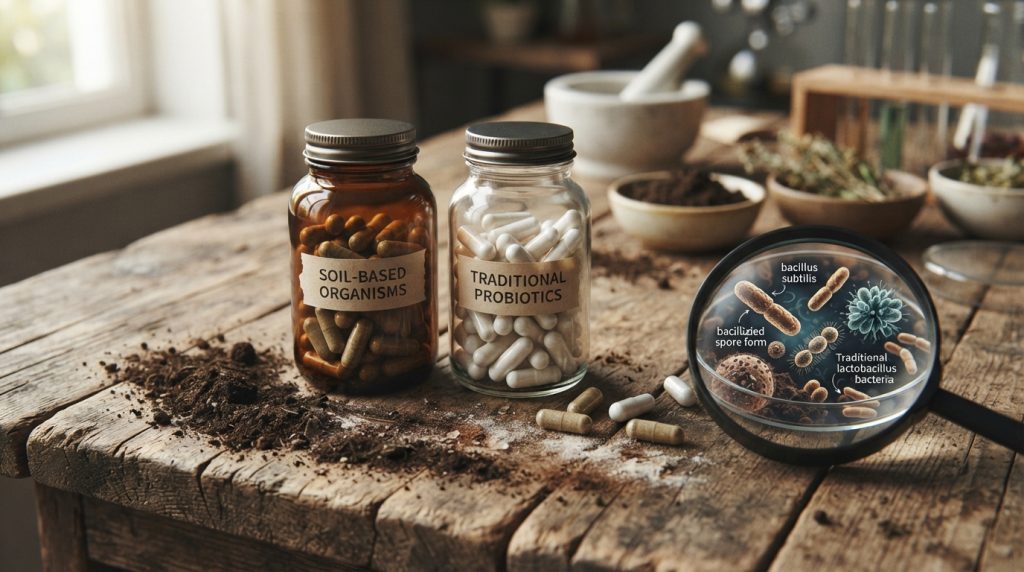
Key Takeaways
| Soil-based organisms (SBOs) | Spore-forming strains that can be more resilient through stomach acid for sensitive digestion support. |
| Traditional probiotics | Usually live bacteria, which can be more vulnerable to heat, storage, and stomach acid. |
| For IBS-style symptoms | Research suggests spore-forming strains can help with abdominal pain and stool consistency in IBS. |
| Don’t forget the “what you feed them” part | Prebiotics, fibre, and chrono-nutrition support microbiome diversity (and better outcomes). |
| Start gently and give it time | Most people notice changes over weeks, not days, especially if your gut is reactive. |
| Best for sensitive digestion planning | Pair any choice with food-first strategies like travel planning and gut-friendly recipes. |
- Quick question: “Are soil-based organisms better for sensitive digestion?” If your gut is easily irritated, evidence-based spore-formers often feel gentler and more consistent. (See our best spore-based probiotics for sensitive stomachs.)
- Quick question: “What’s the difference between prebiotics and probiotics?” Prebiotics feed beneficial bacteria, probiotics are live microbes. We break it down in our ultimate guide to prebiotics vs probiotics.
- Quick question: “What should I eat when my gut is sensitive?” Use our gut healthy recipes as your default starting point.
We’ve read hundreds of research papers and articles, and collated the evidence for what really works, so you don’t have to.
First, what are soil based organisms (SBOs) and why do they matter for sensitive digestion?
Soil based organisms are typically spore-forming strains. That means they can survive conditions that would often knock back other microbes, particularly the stomach’s acidic environment.
In plain language, it’s about delivery. If your gut is sensitive, you want strains that are resilient enough to reach the gut intact, rather than spending the journey being damaged before they can do their job.
Research and clinical discussions repeatedly point to spore-forming resilience as a practical advantage for people dealing with symptoms like bloating, gas, indigestion, and IBS-related discomfort.
So what does “survive stomach acid then activate” mean for you?
- You’re more likely to get consistent microbial exposure.
- You may feel fewer “start-up” digestive fireworks compared with some traditional formulas.
- Your gut has a better chance of settling into a rhythm, instead of reacting to every dose.
And yes, this connects to skin. Your microbiome, the trillions of microbes that live in and on your body, impact your mood, skin, sleep and more. When digestion improves, the gut-skin axis often follows (we’ve seen it, and we keep seeing it).
Traditional probiotics for sensitive digestion: what they do well, and what can go wrong
Traditional probiotics are live microorganisms, usually bacteria (and sometimes yeasts). In studies and real-world use, they can be helpful, especially when paired with the right prebiotic support.
But sensitive digestion comes with variables, like stomach acidity, irregular eating patterns, travel stress, and storage conditions. If a formula relies on fragile live microbes, the amount that actually reaches your gut may be lower than you expect.
Here’s where people often get stuck: they try a traditional probiotic, feel a bit hopeful, then notice lingering bloating or inconsistent stool patterns. Sometimes it’s tolerability. Sometimes it’s mismatch. Sometimes it’s simply not enough microbial “landing” in the gut to make a real difference.
If you want a simple framework, think like this:
- SBOs focus on resilience and delivery (often spore-based).
- Traditional probiotics focus on live cultures (often more sensitive to conditions).
Either approach can work. The comparison matters most when your gut is easily irritated, especially with IBS-style symptoms.
Did You Know?
Human trials support specific spore-forming strains for common gut complaints, including gas, bloating, occasional constipation, and abdominal pain.
Source: Seed Cultured (Soil-Based Probiotics Guide)

Compare Soil Based Organisms vs Traditional Probiotics for sensitive digestion symptoms (IBS, bloating, constipation)
When you compare Soil Based Organisms vs Traditional Probiotics for Sensitive Digestion, the most useful lens is symptom fit. People don’t just want “more good bacteria”. They want fewer flare-ups, steadier digestion, and less unpredictability.
So, what does the evidence say for spore-formers in sensitive digestion scenarios like IBS?
- IBS-style abdominal discomfort: Multiple randomised, double-blind trials in adults with IBS reported improvements in abdominal pain and stool consistency from Bacillus Coagulans strains, with reassuring safety data.
- Gas and bloating: Trials have supported spore-forming strains in reducing symptoms including gas, bloating, and indigestion.
- Constipation and stool consistency: Research also points to improvements in gut transit time and stool consistency, including in adults with mild, occasional constipation.
For comparison, traditional probiotics can also support gut balance, but if you are sensitive, you often need a formula that tolerates your system well and delivers reliably. That’s exactly where soil-based organisms can feel like the more consistent option.
Our personal take from the trenches: Like many women, we never expected gut health to be the missing piece of our wellness puzzle. But once we saw how digestion influenced skin, energy, and comfort, we became obsessed with choosing strains that match sensitive digestion, not just generic “health” labels.
Best for sensitive digestion comfort: how spore-formers often support “gentle, science-backed” routines
If your goal is Compare Soil Based Organisms vs Traditional Probiotics for Sensitive Digestion with minimal drama, spore-forming formulas are often the best place to start. They’re designed to keep going when your gut conditions get tough.
On top of resilience, spore-based products are frequently discussed as a better fit for sensitive stomachs, especially when bloating and IBS-like symptoms are active.
For example, our guidance around best spore-based probiotics for sensitive stomachs highlights why spore-based strains can be naturally resilient, survive stomach acid, and reach the gut intact.
It also focuses on practical, day-to-day support, including how to use these formulas safely and how to pair them with food-first strategies.
And if you’re wondering whether this is “just marketing”, we get it. That’s why we lean on the mechanism (survival and activation), the trial outcomes (symptoms like bloating, gas, constipation, and abdominal pain), and the overall pattern (people feel better when their gut barrier and digestion calm down).
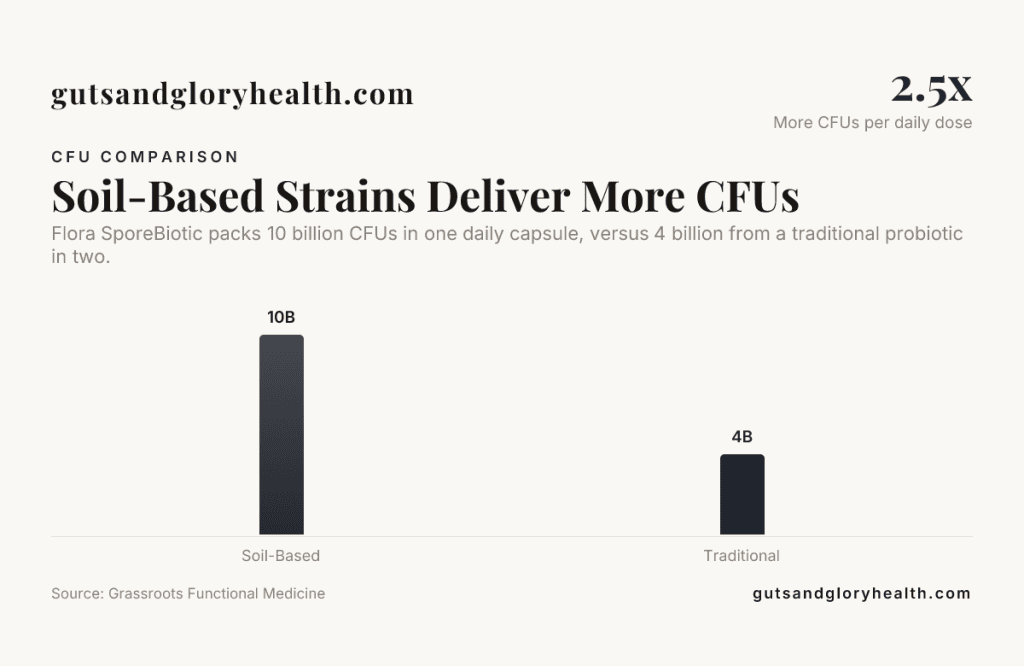
Flora SporeBiotic packs 10 billion CFUs in one daily capsule, versus 4 billion from a traditional probiotic in two.
Traditional probiotics vs soil based organisms for sensitive digestion, practically speaking: dose, timing, and tolerance
When you’re Compare Soil Based Organisms vs Traditional Probiotics for Sensitive Digestion, the practical question is how to take them without setting off your gut.
While each product’s directions matter, a sensible approach looks like this:
- Start low and stay consistent. Sensitive digestion often needs steady exposure, not on-off experiments.
- Use “food-first” support. Prebiotics, fibre, and microbiome-friendly meals help your gut microbes actually thrive.
- Track symptoms, not vibes. Focus on bloating, stool consistency, urgency, and comfort after meals.
- Give it a fair trial window. Gut symptoms are not instant switch-offs, they’re adaptation.
In our travelling with a sensitive gut guide, we talk about how routine changes can trigger symptoms quickly. That same logic applies to supplements. If your week is chaos, your gut will reflect it.
If you’re pairing supplements with nutrition, check out the difference between prebiotics and probiotics, so you don’t accidentally starve the microbes you’re trying to support.
Did You Know?
In the article’s clinic example, Flora SporeBiotic contains more than twice as many CFUs (10 billion vs 4 billion) in only one capsule per day, compared to two.
Source: Grassroots Functional Medicine
Gut-skin axis support: why sensitive digestion can show up in skin (and what to do about it)
Metabolic Beauty and the Gut-Skin Axis have officially moved from fringe wellness circles into mainstream science. That matters for Compare Soil Based Organisms vs Traditional Probiotics for Sensitive Digestion because, when digestion steadies, skin often follows.
When your gut is stressed, your body can respond with inflammation and barrier disruption. That can show up as skin flare-ups, uneven texture, or persistent sensitivity, even when you have a solid skincare routine.
So the best strategy is often inside-out: support the gut with the right microbes, then support them with the right foods. That’s also why we keep returning to the seed terms that matter, microbiome diversity, hormonal shifts, and metabolite production.
If you want a straightforward starting point, explore:
- skin microbiome support for the gut-skin axis angle
- microbiome food ideas so you can feed your microbes
NB, this is also why we talk about “fuelling your glow”. When digestion improves, you’re supporting hormone balance, metabolic beauty, and that inside-out glow we’re all chasing.
Food-first pairing for sensitive digestion: prebiotics, chrono-nutrition, and gut-friendly recipes
Supplements help, but they work better when your fridge supports your microbiome. What does this mean? Look to your fridge!
Prebiotics are non-digestible fibres that feed beneficial gut bacteria. Probiotics are live microorganisms. Postbiotics are metabolites and compounds made after microbes do their thing. When you compare Soil Based Organisms vs Traditional Probiotics for Sensitive Digestion, this “ecosystem” view is where the difference becomes real.
Here are easy, practical pairings that suit sensitive digestion:
- Fermented foods (a gentle microbiome addition for many people)
- Fibre-rich plants to feed beneficial bacteria
- Warm, comforting meals that reduce the overall “stress” on digestion
If you want recipe inspiration, start with soup recipes for comfort when your gut is reactive, or browse dinner recipes to build a consistent routine.
And if you love drinks that feel like care, our gut healthy smoothies are a good way to support gut comfort without overcomplicating your day.

Best for you: choosing between soil based organisms vs traditional probiotics when you have sensitive digestion
Let’s make this decision simple. When you’re Compare Soil Based Organisms vs Traditional Probiotics for Sensitive Digestion, the “best” choice is the one that matches your symptoms and your tolerance.
Here’s our reader-friendly decision guide:
- Choose soil based organisms if you have reactive digestion, bloating after meals, IBS-like discomfort, or you want strains that are designed to survive stomach acid and reach the gut intact.
- Choose traditional probiotics if you tolerate live cultures well, you already have consistent meal patterns, and you’re willing to pair with prebiotic-rich foods so the microbes can thrive.
- Choose both (carefully) if you’re stable, and you use a food-first plan to avoid “random experimentation”. Most people do best with one change at a time.
We’re also big believers in our 30-30-3 Microbiome Protocol, because the supplement question rarely works in isolation. In short, support the gut through plants, movement, and fermented foods, then choose microbes that actually fit your sensitive digestion.
Having tried it myself in our favourite Glow & Calm Elixir, personally I’m truly hooked. But even with top-tier support for skin and scalp, the biggest difference for us always came back to gut comfort and consistency.
Evidence Based
Comparing Soil Based Organisms vs Traditional Probiotics for Sensitive Digestion comes down to delivery, resilience, and symptom fit. The shift is clear, more people are using evidence-based gut strategies like spore-forming formulas for IBS-style discomfort, bloating, and stool consistency, and pairing them with prebiotics and microbiome-friendly meals.
If your digestion is sensitive, soil based organisms are often the best starting point because they’re built to survive and activate in the gut. Then, support your microbiome diversity through food-first choices, and you give your inside-out glow the conditions it needs to show up.
Frequently Asked Questions
Is soil based probiotics worth it for sensitive digestion?
For many people, Compare Soil Based Organisms vs Traditional Probiotics for Sensitive Digestion is worth it because spore-forming strains are designed to survive stomach acid and activate later in the gut. More evidence-based routines pair these strains with prebiotic fibre, so results tend to feel more consistent for IBS-style symptoms, bloating, and stool changes.
Can traditional probiotics make bloating worse for sensitive digestion?
Yes, in some cases traditional probiotics can feel bloating-inducing if the formula triggers fermentation in a gut that is already reactive. When comparing Soil Based Organisms vs Traditional Probiotics for Sensitive Digestion, spore-formers are often selected because they’re more resilient and may be better tolerated.
What’s the difference between soil based organisms and traditional probiotics?
Soil based organisms are usually spore-forming strains that can better withstand harsh stomach conditions and reach the gut intact. Traditional probiotics are live microorganisms, which can be more vulnerable, especially in sensitive digestion situations.
Do soil based probiotics help IBS symptoms like abdominal pain and stool consistency?
Research discussions and trials reported improvements in abdominal pain and stool consistency in adults with IBS from specific spore-forming strains, with reassuring safety data. This is a key reason many people Compare Soil Based Organisms vs Traditional Probiotics for Sensitive Digestion when IBS symptoms are driving their decision.
How long should I try soil based organisms before deciding they do not work?
For sensitive digestion, think weeks rather than days. If you’re comparing Soil Based Organisms vs Traditional Probiotics for Sensitive Digestion, aim for a consistent routine and track symptoms like bloating and stool consistency over a few weeks.
Can I take prebiotics with probiotics if my gut is sensitive?
Often, yes, prebiotics can support microbiome diversity by feeding beneficial microbes. When you Compare Soil Based Organisms vs Traditional Probiotics for Sensitive Digestion, prebiotic support is usually the missing “ecosystem” piece, but start gently with fibre if your gut is reactive.
Are soil based probiotics good for constipation and irregular stool?
Some trials of spore-forming strains have reported improved gut transit time and stool consistency, including in adults with mild, occasional constipation. If irregular stool is part of your sensitive digestion pattern, that evidence is a strong reason to Compare Soil Based Organisms vs Traditional Probiotics for Sensitive Digestion.
Created with AI assistance and reviewed by a human