
9 Tasty Ways to Sneak High Fiber Foods Into Your Day
Your secret to healthy aging
Table of Contents
Let’s talk high fiber foods. Fiber in foods is one of the simplest, most powerful ways to support a healthy life. While protein has been stealing the limelight, fiber really is the quiet hero. Because eating more fiber does so much more than just keep you regular.
Fibre can help lower cholesterol, stabilize blood sugar, support a healthy weight, nourish your gut!
And here’s something many people don’t realize: getting enough fiber is surprisingly linked to deeper, more restorative nights.
And since gut health plays a big role in immunity, inflammation, sleep, and even mood, fiber is a quiet hero when it comes to aging well and feeling vibrant for years to come. So, in a nutshell, we will:
- Share printable high fiber food lists.
- Answer the most important questions regarding fiber and well-being.
- Walk you through the main types of fiber and why they’re important.
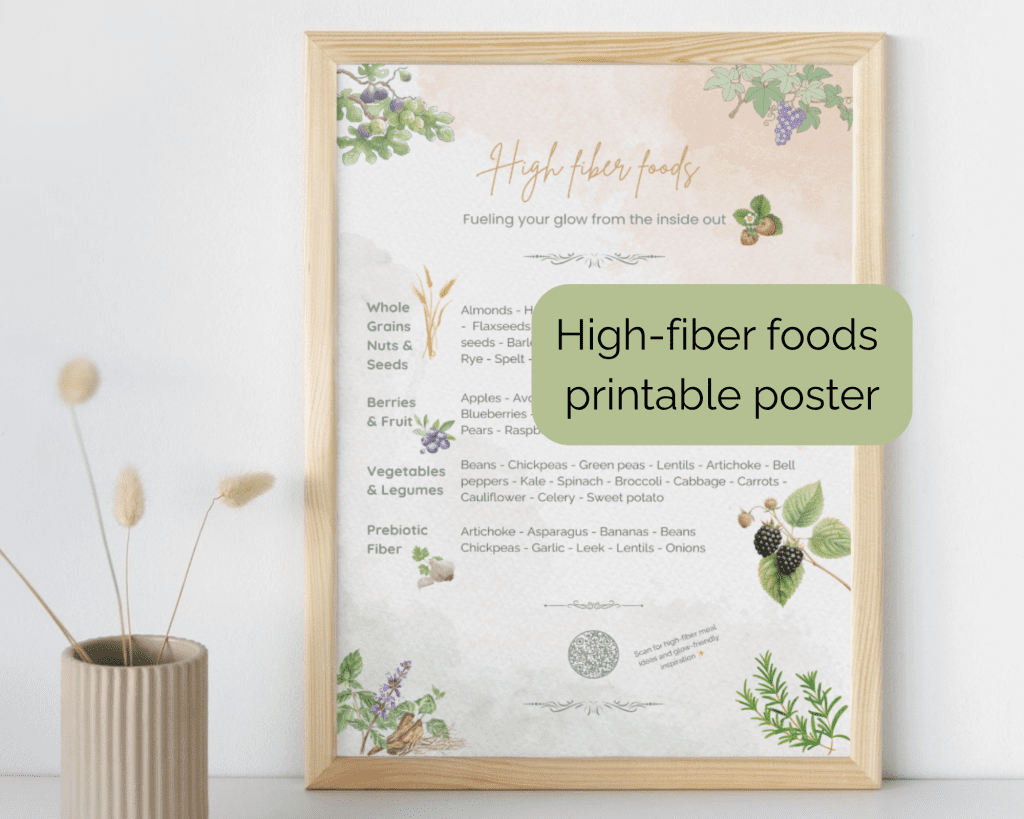
Enjoy a 40% summer discount on this decorative High Fiber Foods kitchen poster! Eating healthy made easy!
Why fiber is the quiet hero
Not all fiber is created equal – and understanding the difference is a game changer for your gut and your glow.
Dietary fiber (the kind found in fruits, veggies, whole grains, seeds, and legumes) adds bulk to your stool and helps keep things moving smoothly through your digestive system. Think of it as your digestive support crew, helping to sweep out waste and keep you regular.
Photo: Unsplash
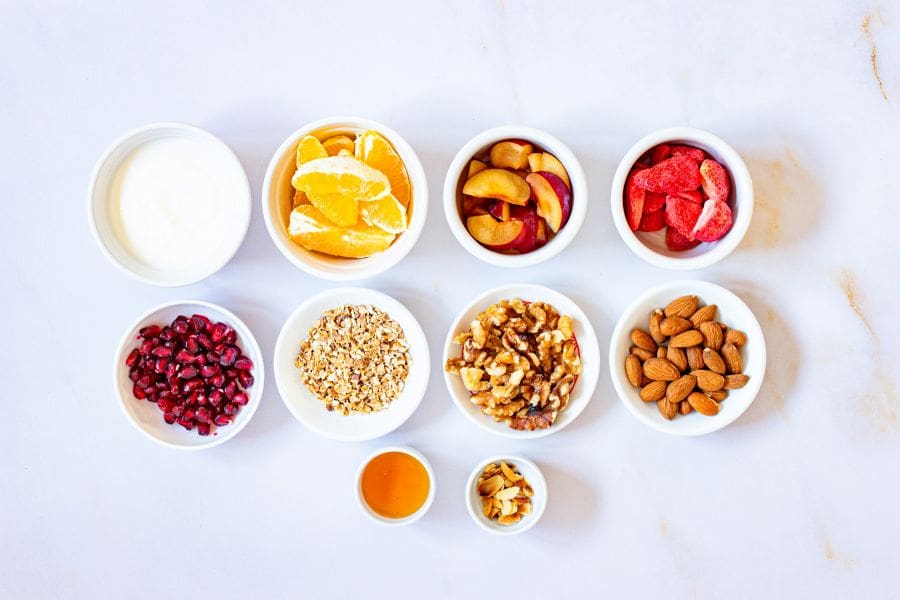
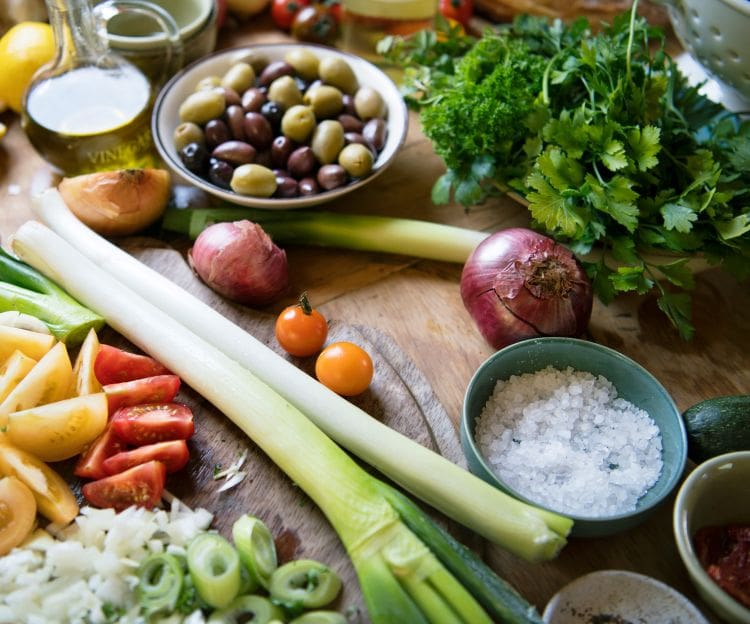
Then there’s prebiotic fiber – a lesser-known but powerful type of fiber that acts as food for the good bacteria in your gut. It’s like feeding your personal army of helpers! You’ll find it in foods like garlic, onions, leeks, asparagus, green bananas, oats, and beans.
Photo: Unsplash
These prebiotic-rich foods do double duty: they support digestion and nourish your gut microbiome, which is deeply connected to your immune system, skin, mood, and healthy aging.
- Try this delightful classic Italian minestrone soup recipe – packed with fiber from colorful vegetables and beans, plus a skin-loving broth as a base.
PS: Scroll down for various helpful food fiber charts.
These prebiotic-rich foods do double duty: they support digestion and nourish your gut microbiome, which is deeply connected to your immune system, skin, mood, and how gracefully you age.
- 20% discount on the e-book “Why fiber is the quiet hero”. With high fiber food list pdf. Grab your copy from our Etsy store using this code for your 20% discount: FIBER2025
And since gut health plays a big role in immunity, inflammation, and even mood, fiber is a quiet hero when it comes to aging well and feeling vibrant for years to come.
We need both types of fiber to thrive. When your digestive crew and your gut bugs are both well-fed, you build a strong foundation for energy, resilience, and that radiant inside-out glow that only gets better with time.

Prebiotic boost the easy way
Try one of our personal favorites supplements PURE from Rain International – with prebiotic fiber + probiotics. A tasty fruit punch with benefits! (affiliate link)
What are examples of high protein foods with fiber?
- Click for a downloadable cheat sheet: High protein foods with fiber
These are some of the best whole-food sources of both fiber and plant-based protein. Examples are: Tempeh, tofu, chia seeds, flaxseeds, hemp seeds, lentils, chickpeas, black beans, kidney beans, and edamame are excellent plant-based options that deliver both protein and fiber. Quinoa, oats, farro, and barley also provide a satisfying combo of the two—especially when paired with veggies or legumes.
You’ll also get a good dose from nuts like almonds, pistachios, and walnuts, and from greens like broccoli, spinach, kale, green peas, and Brussels sprouts. Even sweet potatoes and avocado offer small but meaningful amounts of both nutrients.
Photo: Unsplash

What are examples of low carb high fiber foods?
- Click for a downloadable cheat sheet: Low carb high fiber foods
Here are some great examples of low-carb, high-fiber foods – perfect if you’re aiming to support blood sugar balance, digestion, or gut health without spiking carbs:
🥦 Vegetables (non-starchy)
These are fiber-rich but naturally low in net carbs (total carbs minus fiber):
- Broccoli – high in fiber and great for gut health
- Cauliflower – versatile and great for mash or rice alternatives
- Zucchini – low in carbs and can be spiralized into noodles
- Spinach & kale – nutrient-dense and fiber-packed
- Brussels sprouts – slightly higher in carbs but loaded with fiber
- Asparagus – low in carbs, with gut-friendly prebiotics
🥑 Fats & Fruits (in moderation)
- Avocado – super low net carbs with lots of fiber and healthy fat
- Olives – low carb and provide small amounts of fiber
- Berries (especially raspberries and blackberries) – lower in carbs than most fruits and high in fiber
🥜 Nuts & Seeds
Choose raw or dry-roasted versions for the best health benefits:
- Chia seeds – extremely high in fiber and expand in liquid
- Flaxseeds – great for smoothies and digestion support
- Psyllium husk – almost pure fiber, excellent for gut health
- Almonds, pecans, and walnuts – relatively low in carbs, especially pecans
Are there any foods high in fiber no carbs?
Here’s the deal: fiber itself is technically a type of carbohydrate – but it’s the kind your body doesn’t digest, so it doesn’t raise blood sugar or provide calories the same way. That means “high in fiber with zero carbs” isn’t quite possible – but there are foods that are:
- Extremely low in net carbs (total carbs minus fiber)
- Mostly fiber, with very little else
Closest to “High Fiber, No Net Carbs”:
🌱 Psyllium husk
- Nearly 100% fiber
- Net carbs: ~0g per serving
- Common in keto baking and for digestive support
🌾 Ground flaxseed
- ~2g net carbs per 2 Tbsp, but 5g fiber!
- Bonus: contains lignans (great for hormone balance)
🌰 Chia seeds
- ~1g net carbs per 2 Tbsp, with 10g fiber!
- They expand in liquid and support fullness & gut health
💊 Fiber supplements
- Inulin, methylcellulose, acacia fiber, or resistant starch
- These often have 0–1g net carbs depending on the form
- Great in smoothies or stirred into yogurt
If you’re following low-carb for blood sugar or keto reasons, these are your best bets. And they all support healthy digestion and feed beneficial gut bacteria.
9 Tasty Ways to Sneak High Fiber Foods Into Your Day (No Dry Foods Here!)
P.S. Click for a downloadable cheat sheet: Tasty ways to eat more fiber.
🥣 1. Start with a creamy chia pudding
- Mix chia seeds with almond or coconut milk, cinnamon, and berries.
- Let it sit overnight = rich, spoonable fiber bomb.
- Fiber boost: 10g per 2 tablespoons chia seeds!
🥑 2. Add avocado to everything
- Spread it on toast, dollop it into soups, or blend into smoothies.
- Creamy, nourishing—and 10g fiber per avocado.
🍓 3. Top your yogurt with berries & flax
- Greek yogurt + raspberries + ground flax = fiber-rich + probiotic.
- Raspberries = 8g fiber per cup, flax = 3g per tablespoon.
🍛 4. Make lentil or chickpea stews with warm spices
- Comforting, flavorful, and packed with soluble and insoluble fiber.
- Add turmeric, cumin, ginger for bonus gut-soothing benefits.
🍞 5. Upgrade your baked goods with hidden fiber
- Add psyllium husk, flax, or almond flour to muffins or pancakes.
- Try banana flax muffins or oat-chia breakfast bars.
- They stay moist and pack a fiber punch.
🥗 6. Go for colorful, roasted veggies with dips
- Roasted carrots, sweet potatoes, Brussels sprouts = fiber-rich sides.
- Pair with hummus or tahini dressing for added satisfaction.
🍜 7. Slurp your fiber in soup!
- Pureed veggie soups (like cauliflower, broccoli, or lentil) are smooth, soothing, and secretly fiber-packed.
🌮 8. Swap tortillas for high-fiber wraps or collard greens
- Many low-carb tortillas now have 8–12g fiber per wrap.
- Or try fresh collard leaves for crunch and nutrition!
🍫 9. Try fiber-enhanced treats
- Dark chocolate with nuts and dried raspberries.
- Homemade date-nut energy balls with chia and oats.
💡 Pro Tip:
Increase fiber slowly and drink more water to help your body adjust and prevent bloating. Aim for small, consistent upgrades you enjoy!
Power Couple: For an extra microbiome boost, we like to combine gut healthy supplements with prebiotic high fiber foods!
“One of my go-to probiotics, YourBiology Gut+ contains a powerful mix of 20 Billion CFU probiotics and 10 different strains.”
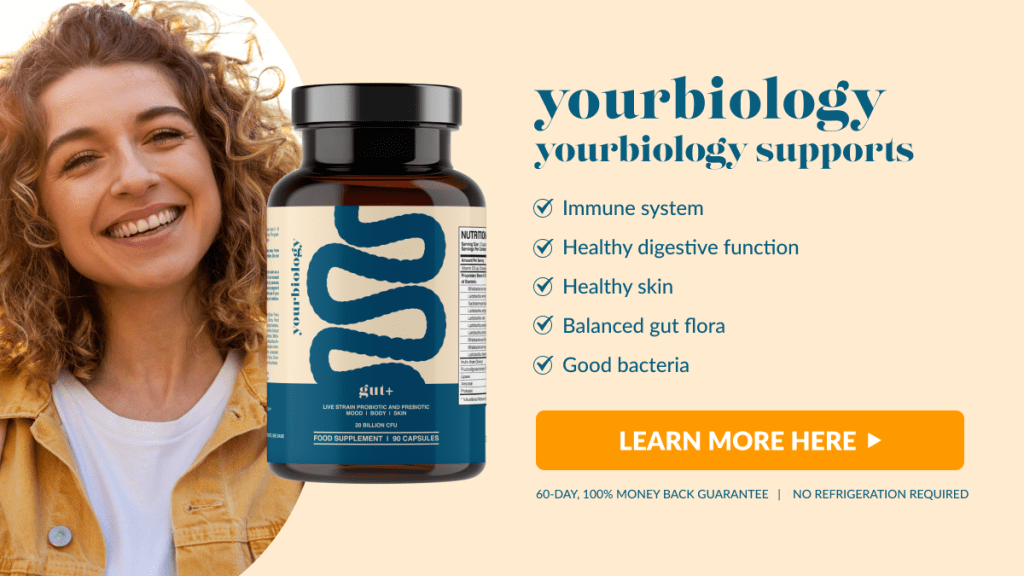
” YourBiology Gut+ also contains 2 prebiotics to help feed all the good bacteria. I love how it reduces bloating, plus gives my skin and gut health an extra boost” – Berit, Guts & Glory Health
Summary: High fiber foods for gut health and wellbeing
- Eating enough fiber helps keep the gut healthy. This is linked to lower risk of type 2 diabetes, heart disease and some cancers. Fiber-rich foods such as fruit, vegetables, whole grains, and legumes, are often also high in vitamins and other nutrients.
- Prebiotics act as “food” for the good bacteria in our gut, They come mostly from fiber that us humans can’t digest and help the good bacteria in your gut thrive. Think of it as “feeding the good guys” 🙂
Fiber FAQ: What You Really Want to Know
Here are some of the most common questions to ask regarding fiber.
-
What is fiber and why is it important?
Fiber is a type of carbohydrate your body can’t digest—but that’s a good thing! It helps keep things moving through your digestive system, supports blood sugar balance, and feeds your good gut bacteria. Think of it as a gentle broom for your insides.
-
How much fiber do I need per day?
Most women need around 25 grams per day, while men may need closer to 38 grams. But many people get far less! Start slowly and drink plenty of water to help your body adjust.
-
What are the best high-fiber foods?
Here are some all-stars:
* Fruits & Veggies: Raspberries, avocado, broccoli, Brussels sprouts
* Whole Grains & Legumes: Lentils, chickpeas, oats, quinoa
* Seeds & Nuts: Chia, flax, almonds, sunflower seeds
* Low-Carb Picks: Zucchini, leafy greens, cauliflower, psyllium husk -
What’s the difference between soluble and insoluble fiber?
* Soluble fiber dissolves in water and forms a gel-like substance. It helps lower cholesterol and stabilizes blood sugar (think oats, chia, apples).
* Insoluble fiber adds bulk to stool and keeps things moving smoothly (think leafy greens, flax, and veggies with skins).
Both are beneficial—and most fiber-rich foods contain a mix of both. -
Can I get enough fiber on a low-carb or keto diet?
Yes, absolutely! Focus on leafy greens, avocado, chia and flax seeds, cauliflower and broccoli, and psyllium husk. These are low in net carbs but high in fiber and nutrients.
-
Does fiber help with weight loss?
It can. Fiber helps you feel full longer, supports stable energy, and curbs cravings—especially the kind that hit mid-afternoon. Plus, it keeps your digestion on track, which can help reduce bloating and inflammation.
-
Can too much fiber cause problems?
If you add too much too fast, yes. You might feel bloated or gassy. Ease in gradually, spread your fiber intake throughout the day, and drink water to keep things flowing.
-
Should I take a fiber supplement?
Whole foods are ideal, but supplements like psyllium husk, inulin, or acacia fiber can be helpful—especially if your diet’s limited or your digestion needs support. Choose clean, additive-free options and listen to your body.
-
Is fiber good for gut health?
Definitely. Fiber is the preferred fuel for your good gut bacteria—it acts like compost for your internal garden. Prebiotic fibers (like those in onions, garlic, and chicory root) are especially great for supporting a diverse, thriving microbiome.
-
Can fiber help with constipation or diarrhea?
Yes to both!
* Constipation? Fiber adds bulk and softness to stool, making it easier to pass.
* Diarrhea? Soluble fiber absorbs excess water and helps firm things up.
It’s all about balance and the right kind of fiber. -
How does fiber affect skin?
By promoting regularity, fiber helps keep your skin looking clear and glowing. Boosting Collagen Production: Fiber-rich foods, especially fruits and vegetables, are packed with vitamins and minerals that support collagen production. Collagen is the protein responsible for keeping your skin firm and wrinkle-free.
More Gut Healthy Posts You Might Enjoy:

Sea Buckthorn: The Skin and Gut Health Superfood You Should Know About Sea buckthorn has gained a cult following among skincare and wellness enthusiasts — and for good reason. Rich in rare fatty acids, vitamins, and antioxidants, this bright orange berry supports both your outer glow and inner gut health. Having tried it myself in […]

Easy High Fiber Meals – Boost Your Skin Glow, Inside Out Looking for a quick overview of how to add more fiber to your diet? We’ve got you covered with these ideas for easy high fiber meals to keep your gut happy and your meals exciting! Because eating enough fiber is a key to glowing […]

Best Probiotics for Acne? 12 That Actually Work (Derm & Gut-Backed) If you struggle with acne, you’re not alone—acne affects over 650 million people worldwide. I was one of them for many years, until I realised that skin health is more than just skin deep! In fact, new research shows that balancing your skin and […]

Probiotic strains for IBS: what the clinical evidence actually shows Probiotic strains for IBS: what the clinical evidence actually shows is important because one big meta-analysis pooled 20 studies and found probiotics outperform placebo for global IBS symptoms. That means we can talk about “works for IBS” in a way that is not based on […]
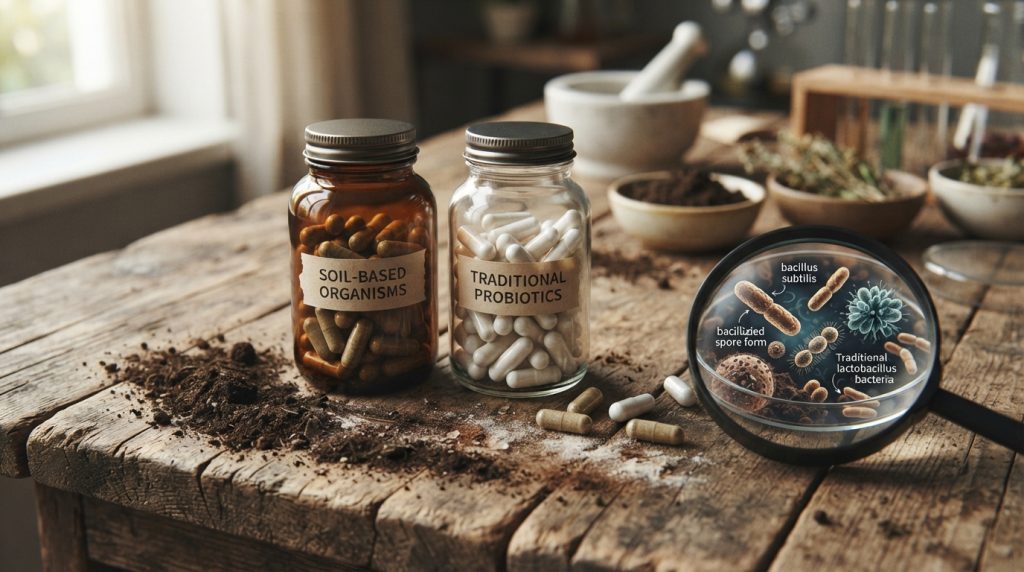
Compare Soil Based Organisms vs Traditional Probiotics for Sensitive Digestion (Best Picks for IBS, Bloating & Gut-Skin Results) Soil Based Organisms vs Traditional Probiotics for Sensitive Digestion is one of the most common questions we get from people whose gut feels touchy, yet they still want an inside-out glow. Did you know that some probiotics […]

Best Spore-Based Probiotics for Sensitive Stomachs: Gentle, Science-Backed Support That Actually Works When it comes to the Best Spore-Based Probiotics for Sensitive Stomachs, the science is quietly impressive, clinical trials show a 30-day course can reduce markers of gut permeability by 42%, which explains why so many people finally feel relief without the usual bloating. […]

Ultimate Guide to Using Prebiotic Fibre for Sustained Energy Did you know that 90% of women and 97% of men don’t get enough fibre in their daily diet? That gap is exactly why we put together this ultimate guide to using prebiotic fibre for sustained energy, because we’ve read hundreds of research papers and articles, […]
How to Choose Quality Digestive Enzymes for Better Nutrient Absorption Did you know that a staggering 70,000,000 people in the United States deal with gastrointestinal disorders every single year? That number alone tells us why so many of you write in asking how to choose quality digestive enzymes for better nutrient absorption, because bloating, sluggish […]
Best Probiotics for Women Over 40: Our Science-Backed Pick of the Top Strains Finding the best probiotics for women over 40 has become one of the most-asked questions we get, and here’s a number that stopped us in our tracks: a striking 94% of women going through menopause report digestive health issues, often tied to […]
Digestive Disorders & Microbiome Recovery: What the Science Actually Says A single course of antibiotics can reduce gut microbial species by approximately 20, according to a Swedish analysis of nearly 15,000 adults, and that disruption can persist for years. This finding sits at the heart of why digestive disorders and microbiome recovery have become one […]
The ’30-30-3′ Microbiome Protocol: Your Science-Backed Daily Blueprint for a Thriving Gut Did you know that 84% of consumers report being more interested in gut health products than in previous years? It’s no wonder that simple, evidence-based frameworks like the ’30-30-3′ Microbiome Protocol are capturing so much attention right now. We’ve been fascinated (to the […]
Chrono-Nutrition for the Microbiome: The Best Guide to Timing Your Meals for Gut Health Chrono-nutrition for the microbiome is one of the most exciting and practical shifts happening in gut health right now, and the science behind it is changing how we think about what we eat AND when we eat it. Consider this: over […]

Postbiotic pH Balancing: The Plain-English Guide to Supporting a Healthier Gut Ecosystem Postbiotic pH Balancing matters because clinicians often flag problems when vaginal pH rises above 4.5, a pH threshold tied to common vaginitis diagnoses. More people are asking the same practical question for gut health: how can we support stable, “right-range” pH conditions without […]
Best Natural Remedies for Reducing Chronic Systemic Inflammation If you’re looking for the best natural remedies for reducing chronic systemic inflammation, you’re in exactly the right place. And here’s something that might surprise you before we even get started: research shows that short sleep duration is associated with more than double the odds of elevated […]
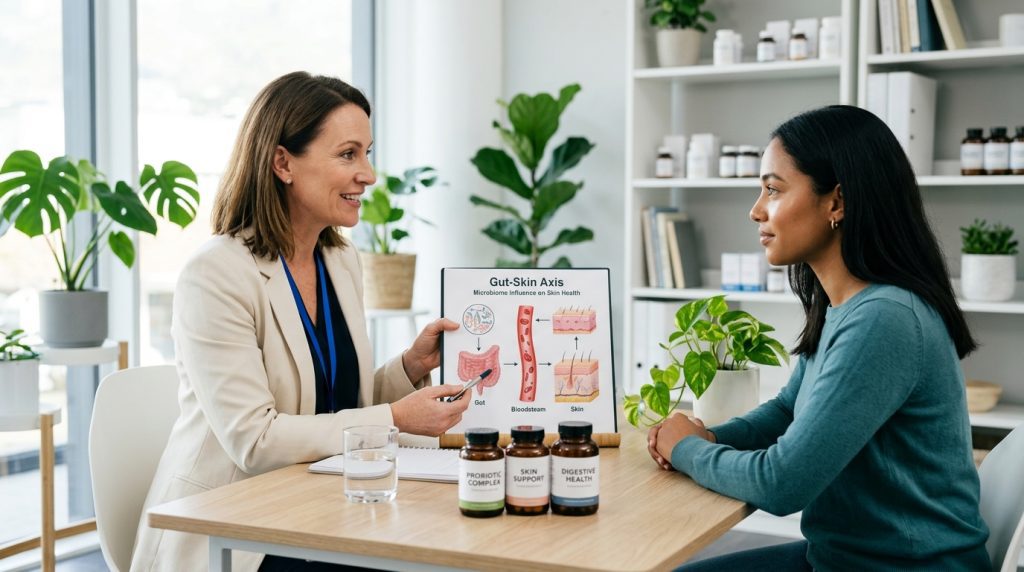
Metabolic Beauty: The Gut-Skin Axis Guide (What’s Actually Working Right Now) Metabolic Beauty and the Gut-Skin Axis in 2026 have officially moved from fringe wellness circles into mainstream science, and the numbers prove it: a staggering 67% of consumers now prefer ingestible beauty products over traditional topical solutions, signalling that the era of “beauty from […]

Menopause, Hormones & Gut Health: Understanding the Changes and Practical Solutions Menopause brings many changes to your body, and your digestive system is no exception. During this transition, dropping levels of oestrogen and progesterone affect more than just your reproductive system. These hormones also play key roles in how your gut functions, from digestion speed […]

The 24-Hour Glow Protocol: Transform Your Skin Through Microbiome-Focused Nutrition and Skincare Your skin and gut health are connected in ways that become visible within just 24 hours of changing what you eat and how you care for your skin. The microbiome—the collection of bacteria living in your gut and on your skin—responds quickly to […]

The Inside-Out Glow Up: How Gut Health Transforms Your Skin Care Results You’ve probably spent money on serums, creams, and treatments to get clear, glowing skin. But the real secret to healthy skin might be hiding in an unexpected place: your digestive system. Your gut health directly affects how your skin looks, influencing everything from […]

Is Your Clean Skincare Actually Hurting Your Microbiome? The Hidden Truth About Popular Products Your skin is home to trillions of tiny organisms that form a protective ecosystem called the skin microbiome. These bacteria, fungi, and other microbes help regulate moisture, control inflammation, and defend against harmful invaders. When this delicate balance gets disrupted, your […]