
Glow From Within Through The Skin Gut Health Connection!
5 Steps to Skin Gut Health – Backed by Science
Have you heard about the skin gut health connection? If you’ve been struggling with acne, rosacea, eczema, or dull skin, the problem might not be on the surface – but in your gut!
My twin sister and I battled stubborn skin issues for years—until we uncovered the skin and gut health connection.
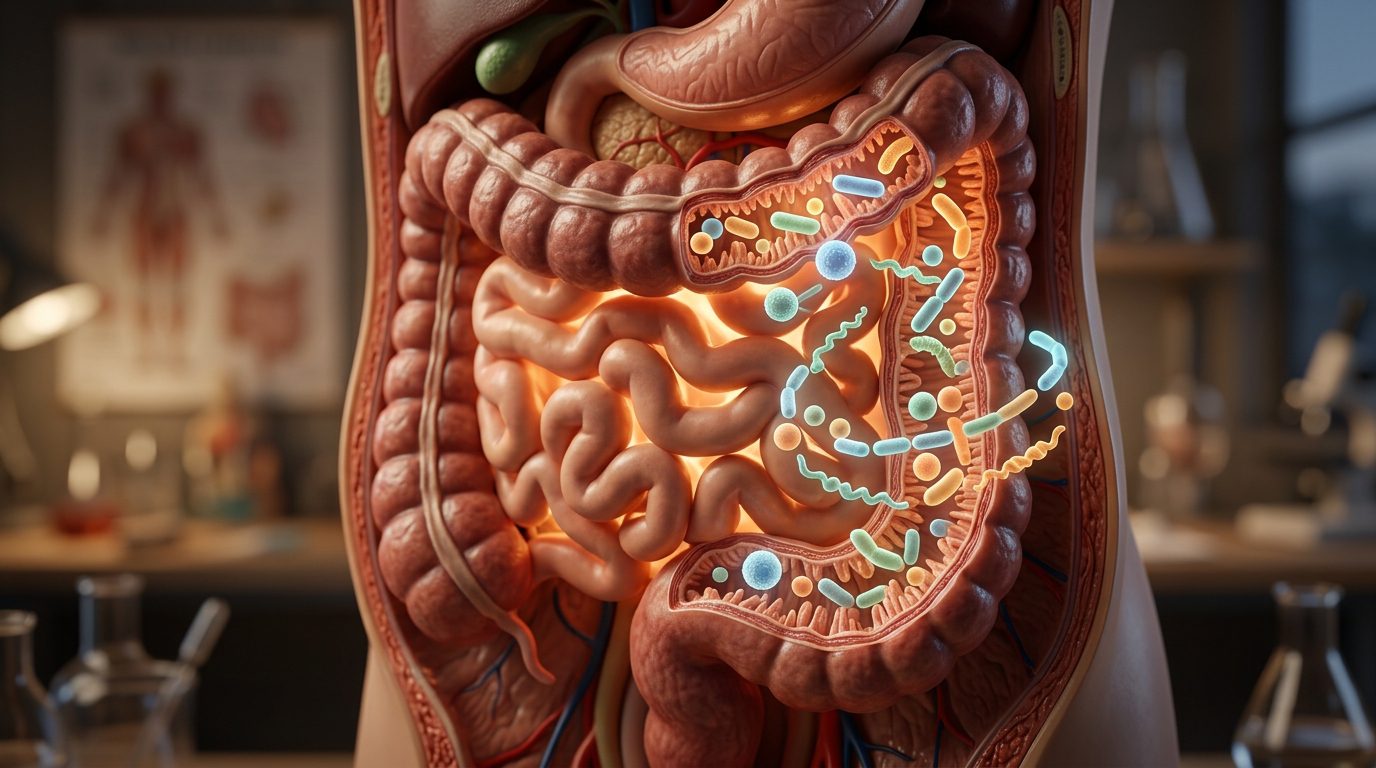
The skin gut health connection is backed by science, showing that skin issues such as inflammation, breakouts, and premature aging are linked to our microbiome – the trillions of microbes that live in and on our bodies. For example, we now know that acne and rosacea, while complex of course, are linked through the skin-gut health-inflammation axis.
I’m a Medical Microbiologist and skincare enthusiast, and my identical twin is a real healthy foodie enthusiast, with a passion for gut healthy foods that taste great, while nourishing your gut microbiome! Together we’ve witnessed firsthand how improving gut health through what we eat, and quality supplements, can transform skin health.

In a nutshell, this before-after photo shows why we’re so passionate about the skin gut health connection!
Tonje’s skin gut health journey: Before / after photos
Through extensive research and in-depth personal experience, we’ve examine what works and crucially, tested it ourselves in a real life setting! The result: A 5-step Guide to Skin Gut Health, sharing with you the exact steps we took to heal our skin from within. So, let’s dive right into the science-backed strategies that can nourish your gut and calm your skin for good.
Get in touch if you have questions:
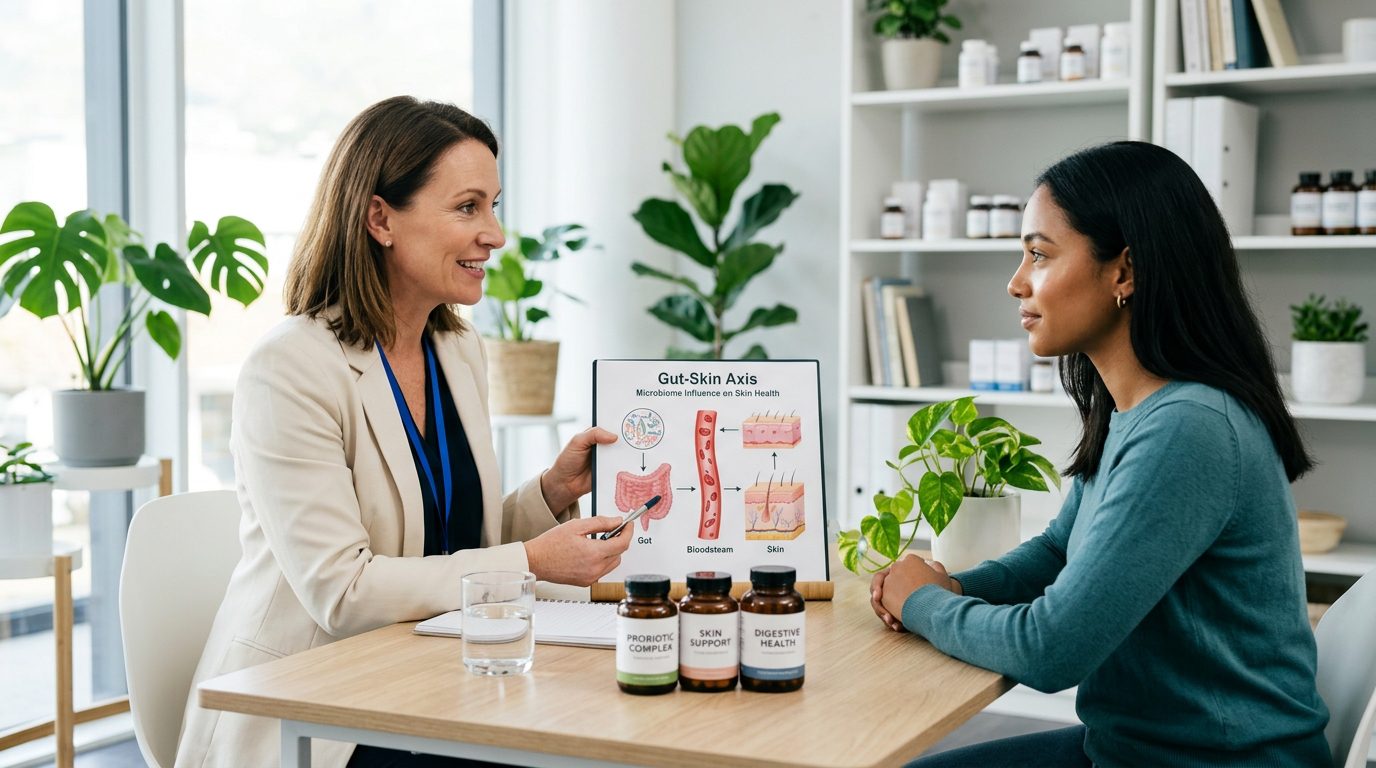
💡 Learn more about the gut-skin axis and why a healthy microbiome is key to glowing skin.
Our 5 Steps To Calmer Skin
Step 1: Nourish Your Gut with Fiber & Prebiotics for Healthy Skin
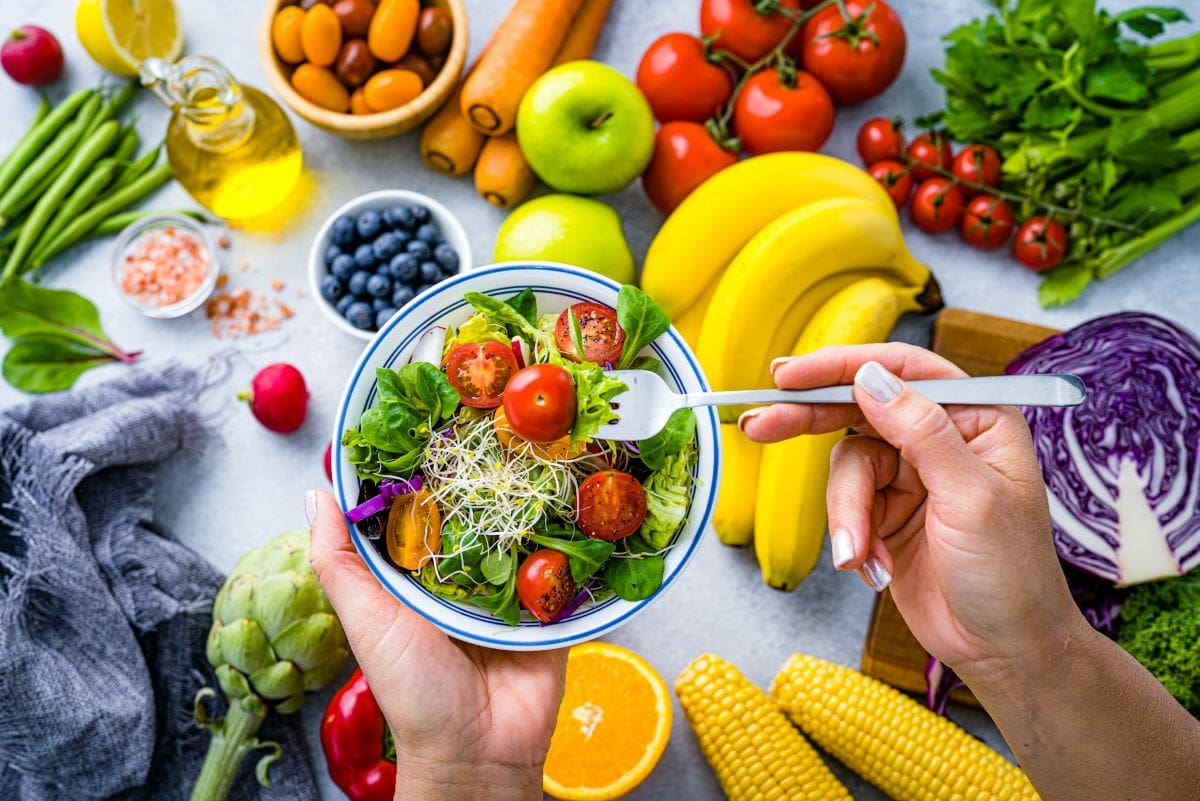
Did you know that your skin health starts in your gut? In fact, a diverse, balanced gut microbiome is essential for calm skin and a healthy glow, and fiber and prebiotics play a key role in feeding your beneficial gut bacteria.
Why Fiber & Prebiotics Matter for Skin Gut Health
✅ Fiber helps regulate digestion, reduce inflammation, and eliminate toxins that could trigger breakouts.
✅ Prebiotics (a special type of fiber) feed your gut’s good bacteria (the probiotics), thereby helping these probiotics work more effectively to improve skin clarity and hydration.
Without enough fiber and prebiotics, your gut microbiome becomes imbalanced (also called dysbiosis) – which can lead to inflammation, breakouts, rosacea, and even premature aging.
Best Fiber & Prebiotic-Rich Foods for Healthy Skin
To support your gut-skin connection, load up on these skin-loving foods:
High-Fiber Foods:
- Leafy greens (spinach, kale, Swiss chard)
- Legumes (lentils, chickpeas, beans)
- Nuts & seeds (flaxseeds, chia seeds, almonds)
- Whole grains (quinoa, bulgur, brown rice)
💡Check out these 7 Best Seeds that support gut health and radiant skin
🧄 Best Prebiotic Foods:
- Garlic
- Leek & onions
- Bananas (especially slightly green ones)
- Asparagus
- Oats
- Chicory root
💡 Quick Tip: Add chia seeds to smoothies or oatmeal for a fiber and prebiotic boost that helps your gut bacteria thrive!
➡️ Start your day with this gut-healing smoothie packed with prebiotic fiber and skin-loving nutrients.
Step 2: Boost Your Skin Gut Health with Probiotics
Adding probiotics, such as beneficial bacteria, through food or supplements may help balance your skin and gut microbiome. Personally, skin healing probiotics have made perhaps the biggest difference to my skin, alongside probiotic microbiome skincare.
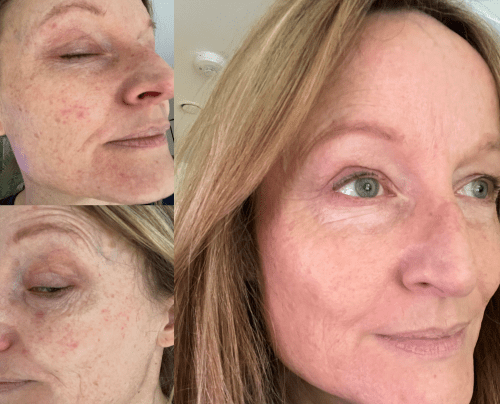
I’m glad I took these before pictures (above), to track my results, because honestly, at the start of what was a bit of a personal ‘experiement’, and I didn’t know I’d finally found something that could work for my troublesome skin!
Importantly, not all probiotics are created equal!
Berit, Medical Microbiologist
Some strains are especially good for skin health. What’s more the quality of probiotic supplements can vary widely, so choosing one that’s backed by science and third-party tested is essential.
We recommend looking for probiotic supplements with at least 10 billion CFUs (CFU stands for colony forming units, which quantifies the number of live bacteria in a probiotic product). In addition, look for strains like Lactobacillus paracasei and/or Lactobacillus reuteri, which have been shown to improve skin barrier function.
Our top picks include:
- YourBiology Gut+ (contains probiotics, prebiotics, digestive enzymes and vitamin D for added skin benefits)*
- PURE from Rain International (contains 20 Billion Probiotics, prebiotics plus seed nutrition)*
- VIOME Personalized Probiotics, based on a gut health test
- EPIGENETICS L reuteri, which seems to work especially well for my skin barrier and skin hydration
- Fermented foods like kefir, kimchi, sauerkraut, and miso soup
Probiotics may help calm inflammation, strengthen the skin barrier, and promote a balanced microbiome.
How to select an effective probiotic supplement
If you’re investing in a probiotic supplement, choose one that contains clinically studied strains in effective doses.
Pro tip: Look for these 5 features when selecting a probiotic for your needs:
- Check for CFUs and probiotic viability (at least 10 billion CFUs)
- Include a mixture of strains
- Choose the right strain for your needs
- Ensure the supplement is backed by science
- Include a prebiotic
Why We Love PURE Probiotics for a Skin Gut Health Boost
If you prefer to ‘drink your supplements’ then the delicious PURE probiotics* are for you! In particular, we love that each dose contains:
20 Billion CFU of beneficial bacteria to improve gut health
Seed-based and other natural ingredients to help reduce the symptoms of inflammation
Inulin: Found in plants, inulin acts as a fibrous prebiotic
This powerful combination is designed to reduce inflammation, aid digestion and fight leaky gut.

Choose the Right Skin-Specific Probiotics
Different probiotic strains have different effects, and not all probiotics will benefit your skin. For skin health, research-backed strains include:
- Lactobacillus reuteri DSM 17938: Supports skin barrier function, helps reduce inflammation and has anti-microbial properties (you can read more about L reuteri and skin health here)
- Lactobacillus rhamnosus GG: May help reduce acne symptoms
- Lactobacillus paracasei LPC28: May improve skin barrier function recovery and reduce local skin inflammation
- Bifidobacterium longum BL21: Helps with hydration and inflammation
- Bifidobacterium breve strains: May improve barrier function and prevent water loss
Read more about how to choose the right probiotic for skin gut health here
💡 See the latest research on how probiotics can help fight acne and inflammation
Personally I use a multi-strain probiotics with skin and mood specific probiotics (did you know stress is increasingly linked to skin health, through the gut-brain-skin connection …). Here’s why YourBiology Gut+ stands out for me:
Clinically Proven Strains: Contains a powerful mix of 10 probiotics, including Bifidobacterium breve and Lactobacillus paracasei, designed to target inflammation, enhance skin hydration, and support skin gut health.
High CFU Count: With over 20 billion CFUs per dose, YourBiology Gut+ ensures you get the potency needed for visible results.
Packed with prebiotics, it feeds the good bacteria, ensuring they thrive and work effectively. Additionally, their third party testing adds another level of confidence for me!
Why It Works for Me
After years of struggling with acne and rosacea, YourBiology Gut+ helped calm my skin and stomach. I especially love the addition of digestive enzymes, and Vitamin D for an extra skin boost! Therefore, I’m happy to recommend it because it’s worked for me.
Try Gut+ Today!
Unlock 10% off and free shipping with the discount code when you click this link. *
Step 3: Heal Your Gut Lining for Clear, Calm Skin
If your gut lining is damaged – sometimes called a ‘leaky gut’ – this can lead to chronic inflammation and a range of conditions, including skin issues. Strengthening or maintaining your gut lining is key to achieving long-term skin gut health.
Gut-healing foods include:
- Bone broth (rich in collagen and amino acids)
- Omega-3-rich foods (fatty fish, walnuts, flaxseeds)
- Polyphenol-rich foods (green tea, dark chocolate, berries)
- Anti-inflammatory herbs like turmeric and ginger
- Fermented foods, such as organic kefir milk and kefir yogurt, which we love so much that we’ve done a deep-dive into the kefir benefits and best kefir brands right here!
These foods help soothe gut inflammation and support the gut-skin axis.
➡️ Discover how bone broth and collagen can repair your gut and rejuvenate your skin
Collagen for Skin Gut Health
Personally, I’m a fan of collagen supplements, and take it regularly, because it’s backed by science and I can see the results for myself with my skin health!
Additionally, science shows that quality collagen may help repair and maintain the gut lining, reducing inflammation and indirectly helping to calm my sensitive skin.
Collagen+ from YourBiology* has a fresh taste and is easily mixed with water, so it helps me up my hydration as well – win win!
Step 4: Avoid These Gut Disruptors That Harm Skin
One of the most important aspects of healing your gut and skin is reducing gut-disrupting foods and lifestyle factors. Common gut disruptors include:
- Processed foods high in sugar and artificial additives
- Alcohol (which negatively affects gut bacteria and hydration)
- Chronic stress (which can alter gut microbiota balance) – More about that below!
- Antibiotic overuse (which can wipe out beneficial bacteria) – Note, seek healthcare professional advice and do not avoid or discontinue antibiotics when needed
➡️ Is sugar ruining your skin? Here’s what happens to your skin gut health when you eat ultra-processed foods
Step 5: Eat Anti-Inflammatory Foods for Skin & Gut Health
Inflammation is a common root cause of skin conditions. Adding anti-inflammatory foods to your diet can help reduce redness, irritation, and breakouts. Some of the best choices include:
- Berries and citrus fruits (high in antioxidants)
- Leafy greens (rich in vitamins and minerals)
- Healthy fats from avocado, salmon and extra virgin olive oil
- Nuts and seeds (rich in vitamin E and omega-3s)
Additionally, anti-inflammatory supplements like Soul from Rain International (which contains cold-pressed seeds) can be a great addition.

Soul by Rain International* is a regular favorite with the Guts & Glory Health Team, because it’s formulated with ingredients known for their strong anti-inflammatory properties.
Specifically, Soul Seed Nutrition has made a real difference to our skin health, and also gives a gentle energy boost, so we’re happy to recommend it!
➡️ Find out which anti-inflammatory foods help boost wellbeing
Bonus Tip: Manage Stress for a Balanced Gut and Clear Skin
Stress isn’t just bad for your mind – it also wreaks havoc on your gut and skin. When stress levels rise, your body releases cortisol, a hormone that disrupts gut bacteria, weakens digestion, and triggers inflammation – all of which can lead to acne, rosacea, eczema, dull and aging skin.
How Stress Impacts the Gut-Skin Axis
❌ Increases gut permeability (also called ‘leaky gut’), allowing toxins to enter the bloodstream and trigger inflammation
❌ Reduces beneficial gut bacteria, leading to imbalance and breakouts
❌ Slows digestion, which may disrupt nutrient absorption—resulting in dull, dry, or acne-prone skin
Simple Ways to Reduce Stress & Heal Your Gut-Skin Connection
🧘♀️ Practice Mindfulness & Meditation
- Just 5-10 minutes a day of deep breathing or meditation can lower cortisol levels and restore gut balance.
😴 Prioritize Sleep
- Lack of sleep disrupts gut bacteria and increases skin inflammation. Aim for 7-9 hours of quality sleep each night.
🌿 Consider Adaptogens for Stress Support
- Ashwagandha, holy basil, and Lemon balm (Melissa officinalis) may help lower stress hormones naturally.
🏋️♂️ Move Your Body Daily
- Exercise helps regulate cortisol and supports a healthy gut microbiome.
💡 Quick Tip: Before bed, try a cup of delicious Buckwheat T (Soba Chai) or 5 minutes of deep breathing to calm your nervous system and promote gut healing.
Final Thoughts: Your Skin Gut Health Journey Starts Now
In summary, our skin gut health method involves:
Step 1: Nourish Your Gut with Fiber & Prebiotics for Healthy Skin
Step 2: Boost Your Skin Gut Health with Probiotics such as Gut+ or PURE
Step 3: Heal Your Gut Lining for Clear, Calm Skin
Step 4: Avoid Gut Disruptors That Harm Skin
Step 5: Eat Anti-Inflammatory Foods for Skin & Gut Health
Bonus tip: Manage Stress for a Balanced Gut and Clear Skin
By following these key steps for skin gut health, you can support your gut microbiome and transform your skin from within. Healing isn’t an overnight process, but with consistent effort, you’ll begin to see real, lasting results. Personally, we started seeing results within a few weeks, however the real lasting change happened after 6+ months. We took one step at a time, finding the solutions that worked for us and fit into our lifestyle.
Start with small, sustainable changes—add more fiber, introduce probiotic-rich foods, and reduce the things that disrupts your gut health. Your skin gut health (and overall well-being) will thank you!
Berit & Tonje
If you’ve tried any of these steps, let us know your experience in the comments. And if you’re looking for more guidance, check out our favorite gut-healing recipes and product recommendations!
If you’re interested in learning more about how probiotics specifically help with skin conditions like acne or rosacea, check out these posts:
NOTE: *These statements have not been evaluated by the Food and Drug Administration. The products are not intended to diagnose, treat, cure, or prevent any disease. Consult with a healthcare professional before starting a new regime or supplements.
Author: Berit Sund, MSc Medical Microbiology. When I don’t write about probiotics and fermented drinks, I spend my days in healthcare education, training or testing out yummy recipes, and of course hang out with my family and friends!
*Affiliate links: This article contains affiliate links from which we may earn a commission.
Other Posts You Might Enjoy
-

Sea Buckthorn: The #1 Skin and Gut Health Superfood You Should Know About
Sea Buckthorn: The Skin and Gut Health Superfood You Should Know About Sea buckthorn has gained a cult following among skincare and wellness enthusiasts — and for good reason. Rich in rare fatty acids, vitamins, and antioxidants, this bright orange berry supports both your outer glow and inner gut health. Having tried it myself in…
-
Easy high fiber meals – Fueling your glow from the inside out
Easy High Fiber Meals – Boost Your Skin Glow, Inside Out Looking for a quick overview of how to add more fiber to your diet? We’ve got you covered with these ideas for easy high fiber meals to keep your gut happy and your meals exciting! Because eating enough fiber is a key to glowing…
-
Best Probiotics for Acne? 12 That Actually Work (Derm & Gut-Backed)
Best Probiotics for Acne? 12 That Actually Work (Derm & Gut-Backed) If you struggle with acne, you’re not alone—acne affects over 650 million people worldwide. I was one of them for many years, until I realised that skin health is more than just skin deep! In fact, new research shows that balancing your skin and…
-
Water Kefir vs Milk Kefir: Which actually fixes bloating?
Water kefir vs milk kefir: which actually fixes bloating? Water kefir vs milk kefir: which actually fixes bloating? The honest answer is that neither is a guaranteed fix, but understanding what goes into each drink can help you choose one that better matches your diet and likely triggers. Key Takeaways What kefir is and how…
-
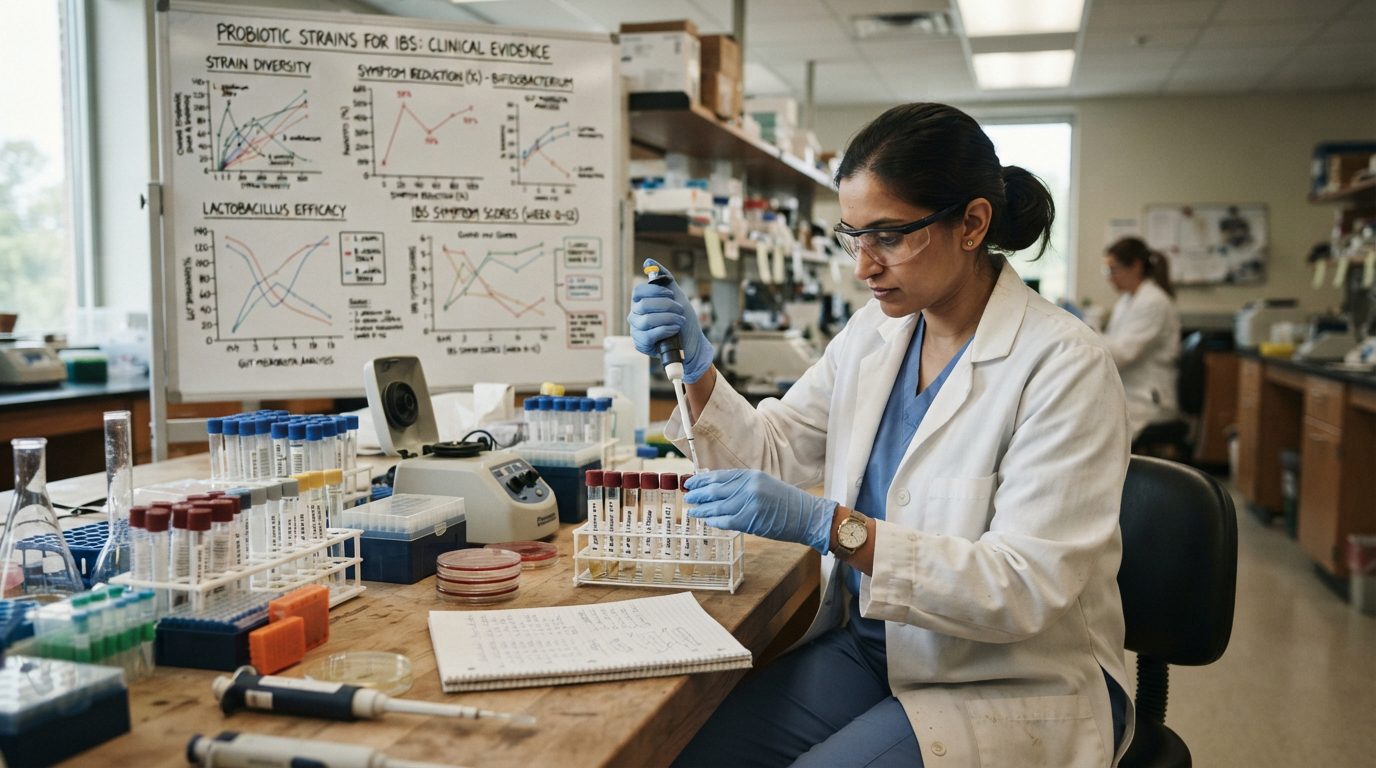
Probiotic strains for IBS: what the clinical evidence actually shows
Probiotic strains for IBS: what the clinical evidence actually shows Probiotic strains for IBS: what the clinical evidence actually shows is important because one big meta-analysis pooled 20 studies and found probiotics outperform placebo for global IBS symptoms. That means we can talk about “works for IBS” in a way that is not based on…
-
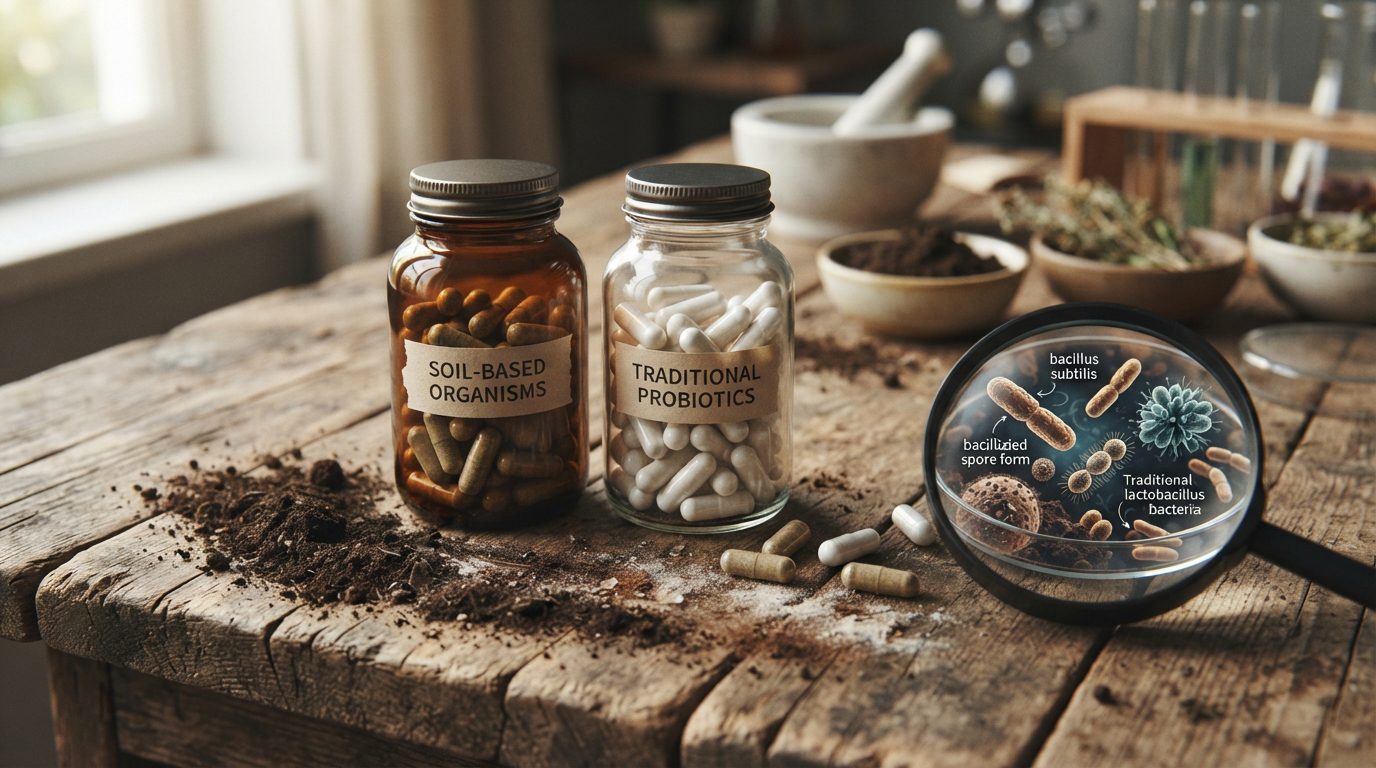
Compare Soil Based Organisms vs Traditional Probiotics for Sensitive Digestion (Best Picks for IBS, Bloating & Gut-Skin Results)
Compare Soil Based Organisms vs Traditional Probiotics for Sensitive Digestion (Best Picks for IBS, Bloating & Gut-Skin Results) Soil Based Organisms vs Traditional Probiotics for Sensitive Digestion is one of the most common questions we get from people whose gut feels touchy, yet they still want an inside-out glow. Did you know that some probiotics…
-
Best Spore-Based Probiotics for Sensitive Stomachs: Gentle, Science-Backed Support That Actually Works
Best Spore-Based Probiotics for Sensitive Stomachs: Gentle, Science-Backed Support That Actually Works When it comes to the Best Spore-Based Probiotics for Sensitive Stomachs, the science is quietly impressive, clinical trials show a 30-day course can reduce markers of gut permeability by 42%, which explains why so many people finally feel relief without the usual bloating.…
-
Ultimate Guide to Using Prebiotic Fibre for Sustained Energy
Ultimate Guide to Using Prebiotic Fibre for Sustained Energy Did you know that 90% of women and 97% of men don’t get enough fibre in their daily diet? That gap is exactly why we put together this ultimate guide to using prebiotic fibre for sustained energy, because we’ve read hundreds of research papers and articles,…
-
How to Choose Quality Digestive Enzymes for Better Nutrient Absorption
How to Choose Quality Digestive Enzymes for Better Nutrient Absorption Did you know that a staggering 70,000,000 people in the United States deal with gastrointestinal disorders every single year? That number alone tells us why so many of you write in asking how to choose quality digestive enzymes for better nutrient absorption, because bloating, sluggish…
-
Best Probiotics for Women Over 40: Our Science-Backed Pick of the Top Strains
Best Probiotics for Women Over 40: Our Science-Backed Pick of the Top Strains Finding the best probiotics for women over 40 has become one of the most-asked questions we get, and here’s a number that stopped us in our tracks: a striking 94% of women going through menopause report digestive health issues, often tied to…
-
Digestive Disorders & Microbiome Recovery: What the Science Actually Says
Digestive Disorders & Microbiome Recovery: What the Science Actually Says A single course of antibiotics can reduce gut microbial species by approximately 20, according to a Swedish analysis of nearly 15,000 adults, and that disruption can persist for years. This finding sits at the heart of why digestive disorders and microbiome recovery have become one…
-
The ’30-30-3′ Microbiome Protocol
The ’30-30-3′ Microbiome Protocol: Your Science-Backed Daily Blueprint for a Thriving Gut Did you know that 84% of consumers report being more interested in gut health products than in previous years? It’s no wonder that simple, evidence-based frameworks like the ’30-30-3′ Microbiome Protocol are capturing so much attention right now. We’ve been fascinated (to the…
-
Chrono-Nutrition for the Microbiome
Chrono-Nutrition for the Microbiome: The Best Guide to Timing Your Meals for Gut Health Chrono-nutrition for the microbiome is one of the most exciting and practical shifts happening in gut health right now, and the science behind it is changing how we think about what we eat AND when we eat it. Consider this: over…
-
Postbiotic pH Balancing
Postbiotic pH Balancing: The Plain-English Guide to Supporting a Healthier Gut Ecosystem Postbiotic pH Balancing matters because clinicians often flag problems when vaginal pH rises above 4.5, a pH threshold tied to common vaginitis diagnoses. More people are asking the same practical question for gut health: how can we support stable, “right-range” pH conditions without…
-
Best Natural Remedies for Reducing Chronic Systemic Inflammation
Best Natural Remedies for Reducing Chronic Systemic Inflammation If you’re looking for the best natural remedies for reducing chronic systemic inflammation, you’re in exactly the right place. And here’s something that might surprise you before we even get started: research shows that short sleep duration is associated with more than double the odds of elevated…
-
Metabolic Beauty: The Gut-Skin Axis Guide (What’s Actually Working Right Now)
Metabolic Beauty: The Gut-Skin Axis Guide (What’s Actually Working Right Now) Metabolic Beauty and the Gut-Skin Axis in 2026 have officially moved from fringe wellness circles into mainstream science, and the numbers prove it: a staggering 67% of consumers now prefer ingestible beauty products over traditional topical solutions, signalling that the era of “beauty from…
-
Menopause, Hormones & Gut Health: Understanding the Changes and Practical Solutions
Menopause, Hormones & Gut Health: Understanding the Changes and Practical Solutions Menopause brings many changes to your body, and your digestive system is no exception. During this transition, dropping levels of oestrogen and progesterone affect more than just your reproductive system. These hormones also play key roles in how your gut functions, from digestion speed…
-
The 24-Hour Glow Protocol: Transform Your Skin Through Microbiome-Focused Nutrition and Skincare
The 24-Hour Glow Protocol: Transform Your Skin Through Microbiome-Focused Nutrition and Skincare Your skin and gut health are connected in ways that become visible within just 24 hours of changing what you eat and how you care for your skin. The microbiome—the collection of bacteria living in your gut and on your skin—responds quickly to…
-
The Inside-Out Glow Up: How Gut Health Transforms Your Skin Care Results
The Inside-Out Glow Up: How Gut Health Transforms Your Skin Care Results You’ve probably spent money on serums, creams, and treatments to get clear, glowing skin. But the real secret to healthy skin might be hiding in an unexpected place: your digestive system. Your gut health directly affects how your skin looks, influencing everything from…
-
Is Your Clean Skincare Actually Hurting Your Microbiome?
Is Your Clean Skincare Actually Hurting Your Microbiome? The Hidden Truth About Popular Products Your skin is home to trillions of tiny organisms that form a protective ecosystem called the skin microbiome. These bacteria, fungi, and other microbes help regulate moisture, control inflammation, and defend against harmful invaders. When this delicate balance gets disrupted, your…
-
Brain, Belly, and Breakouts: How Stress Affects Your Skin Health
Brain, Belly, and Breakouts: How Stress Affects Your Skin Health You might notice that your skin breaks out more during stressful times at work, such as big presentations, or during shool exams for your teenager (or yourself!). This is not a coincidence. Stress directly affects your skin through chemical changes in your brain and body,…
-
Pre, Pro, and Postbiotics: Why Your Face Needs Good Bacteria Too for Healthy Skin
Pre, Pro, and Postbiotics: Why Your Face Needs Good Bacteria Too for Healthy Skin You’ve probably heard about probiotics for your gut, but your skin has its own community of bacteria that needs care too. Your skin is home to trillions of microorganisms that work together to keep it healthy and protected. Prebiotics feed the…
-
Gut Health for Athletes: Fuelling, Recovery & Reducing GI Stress Explained
Gut Health for Athletes: Fuelling, Recovery & Reducing GI Stress Explained Your gut does more than digest food. For athletes, the digestive system directly affects how well the body absorbs nutrients, manages inflammation, recovers from training, and performs under pressure. When gut function breaks down during exercise, it can lead to cramping, nausea, and poor…